



———
Plenary Speakers
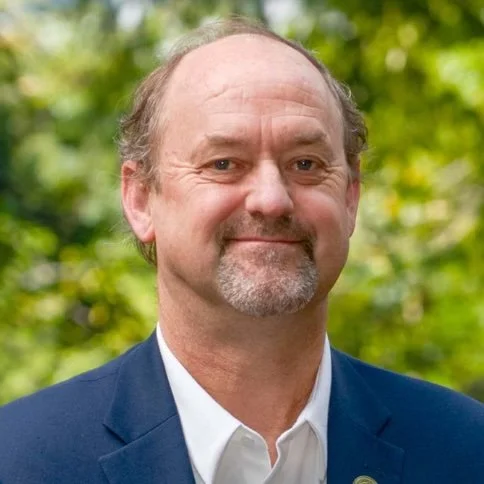
David Ackerly
David Ackerly is a climate change biologist, professor in the departments of Integrative Biology and Environmental Science, Policy, and Management, and Dean of the Rausser College of Natural Resources at UC Berkeley. Ackerly’s research group studies the impacts of climate change on biodiversity in California, and post-fire forest dynamics in mixed hardwood and oak woodlands. He has focused on the importance of spatial climate heterogeneity at landscape and regional scales to enhance resilience and facilitate range shifts for native plants and animals. Ackerly is a recipient of the UC Berkeley 2011 Distinguished Faculty Mentor Award, a Senior Fellow with the Berkeley Institute of Data Sciences, a Fellow of the California Academy of Sciences, and a Fellow of the Ecological Society of America.

Don Hankins
Don Hankins is a professor at California State University Chico and Big Chico Creek Ecological Reserve field director. His expertise spans pyrogeography, water stewardship, and conservation. His academic and cultural knowledge as a Miwkoʔ traditional cultural practitioner informs applied research and projects involving prescribed and cultural burns, ecocultural restoration, and policy. Don engages in stewardship and conservation with diverse organizations, agencies, and Indigenous entities in North America and Australia. He is internationally recognized for his work on Indigenous fire. He’s in leadership roles with the Indigenous Peoples Burning Network, Indigenous Stewardship Network, and California Wildfire and Forest Resilience Task Force.

Jennifer Norris
Dr. Norris’ career began as a federal scientist delivering innovative conservation projects at scale working for the U.S. Fish and Wildlife Service (USFWS) in New Mexico and then as the USFWS Sacramento Field Supervisor. Norris then moved to the California Natural Resources Agency (CNRA) where she served as Deputy Secretary for Biodiversity and Habitat since 2020. At CNRA, Norris led California’s 30x30 initiative to conserve 30 percent of California’s lands and coastal waters by 2030 and oversaw the Cutting Green Tape initiative to accelerate the pace and scale of ecological restoration.
In its 76-year history, WCB has had six executive directors, and Dr. Norris becomes the first female to fill the role. Norris holds a bachelor’s degree in resources policy and planning from Cornell University, a master’s degree in conservation biology from the University of Michigan, and a Ph.D. in ecology from the University of New Mexico. A native of New York State, Norris lives in Sacramento with her husband Scott and occasionally sees their grown children Jessica and Daniel.
Program Speakers
Zan Rubin, Brigid Lynch
zrubin@balancehydro.com, www.balancehydro.com
A Framework for Using Post-fire Sediment to Restore Streams
Abstract
Impacts such as dam construction, channel straightening, and wood removal have impacted channel morphology and, in many cases, have triggered incision and disconnected channels from their former floodplains. Many restoration projects seek to enhance floodplain connectivity for benefits to nutrient cycling, groundwater recharge, flood control, and increasing and cooling baseflow. Concurrently, wildfires, exacerbated by climate change and forest mismanagement, increase sediment delivery to the channel network, presenting the potential for opportunistic restoration to utilize post-fire sediment to un-incise channels and increase floodplain connectivity. We propose a framework to identify areas in river networks for increasing floodplain connectivity, typically- wider, lower-gradient segments. This approach could be implemented quickly after wildfire, taking advantage of increased sediment loads, available materials such as burned trees, and fire access roads that may facilitate equipment access to stream reaches typically beyond the reach of equipment. To demonstrate this approach, we applied it to the Waddell Creek watershed, affected by the 2020 CZU Lightning Complex Fire. We identified potential floodplain reconnection sites using “rain-on-grid” HEC-RAS methodology to model flood inundation extents and identified incised segments where floodplain surfaces are inundated only during extreme events (i.e., 500-year floods) but not inundated by more regular flood flows; these reaches are the optimal targets for low-cost and effective post-fire restoration.
Biography: Zan Rubin, Ph.D.
Dr. Zan Rubin is a principal geomorphologist and hydrologist with Balance Hydrologics who has 20 years of experience in the investigation of complex hydrogeologic, geomorphic, bed sedimentation, water quality, and sediment quality questions in streams, lakes, and wetlands throughout California. He has led many of the firm’s restoration projects, bringing extensive research and applied experience in developing defensible conceptual models of hydrologic, geomorphic, and ecological dynamics at a site, and developing programs to evaluate changes in watershed conditions. Dr. Rubin holds a Ph.D. degree in environmental planning from UC Berkeley and an M.S. degree in geosciences from Colorado State University. He regularly teaches a course on river restoration at UC Berkeley and publishes on topics related to restoration and the impacts of dams.
Biography: Brigid Lynch, Ph.D.
Dr. Brigid Lynch is a geomorphologist and hydrologist with Balance Hydrologics who specializes in watershed restoration, hydrologic monitoring, and GIS analysis. She has successfully led and contributed to projects focused on long-term geomorphic monitoring, watershed-scale restoration opportunity evaluations, sediment source assessments, and restoration design. As the firm’s GIS lead, Dr. Lynch conducts remote analysis, develops field-ready GIS tools, and creates impactful visualizations. She earned her Ph.D. from Indiana University, where she applied numerical models to channel evolution and erosional processes and led field campaigns in southern Peru to collect sediment samples used to quantify uplift rates in the Central Andes. Dr. Lynch has a B.S. degree in geological sciences from the University of Michigan.
Ian Cook
killian.cook@sjsu.edu
A Prescription for Success? Spatial Analysis of Prescribed Fire Effects on Woody Shrub Encroachment in California’s Coastal Prairie
Abstract
Frequent fires historically maintained California’s coastal prairies. Without fire, woody plants encroach on these landscapes, including the native shrub Baccharis pilularis (coyote brush). Coyote brush spreads and resprouts vigorously, hampering land stewards’ management efforts. Prescribed fire curbs coyote brush encroachment, though its efficacy is limited by narrow burn windows and discontinuous fuels. We monitored three prescribed fire units treated with fire alone or additional mastication pre-treatments to examine differences in fire behavior and effects.
We obtained visible-spectrum drone imagery of each prescribed fire unit before mechanical pre-treatment and immediately following prescribed fire. To quantify treatment impact, we used spatial analyses to measure proxies for fire occurrence and behavior: ash presence and color, and changes in shrub canopy cover or color. We trained a supervised, object-based classification model that detected changes in masticated (ash presence) and unmasticated areas (shrub canopy consumption, browning from radiant heat, or no change, and ash presence).
Finally, we used spatial statistics to investigate landscape factors associated with restoration success, such as shrub arrangement, slope, and arrangement of surrounding fine fuels. This method illustrates prescribed fire’s benefits and limitations in coastal prairie restoration, which can help land managers make effective use of the tools at their disposal.
Biography: Zan Rubin, Ph.D.
Ian Cook is a recent MS graduate at San José State University studying prescribed fire ecology. With a background in biology from UC Berkeley and several years of parks maintenance guiding his perspective, he hopes to contribute to more proactive, ecologically informed fire management across California's Coastal Prairie. His current research combines in-situ observation with remote sensing to assess the impact of prescribed fire and other treatments on woody shrub encroachment in these landscapes. When not working, Ian is likely taking pictures of his cats.
Stuart Weiss, Ph.D.
stu@creeksidescience.com, www.creeksidescience.com
Atmospheric Nitrogen Deposition is a Profound Threat to Biodiversity in the Santa Cruz Mountains
Abstract
Air pollution contains reactive nitrogen (N) compounds that fertilize ecosystems worldwide. Atmospheric N-deposition is a profound change in a largely N-limited world. N-deposition processes - emissions, atmospheric transport and chemistry, deposition—are complex. Increased N-availability enhances growth of naturalized annual grasses, smothering native wildflowers, accumulating thatch, and increasing fuel loads and pollen allergies. N-deposition impacts on the threatened Bay checkerspot butterfly were the major nexus for the Valley Habitat Plan, which (along with other mitigation projects) will generate ~$700,000,000 of funding over 50 years. Management of annual grasses requires cattle grazing, fire, timed mowing, or graminicides. Grazing is the only sustainable method at present. Nitrate in baseflow from springs draining serpentine grasslands can exceed 50% of the drinking water standard. The Santa Cruz Sandhills and the lower slopes of San Bruno Mountain (habitat for endangered Mission Blue and callippe silverspot butterflies), and many other grasslands are at risk. Despite tight regulation of NOx emissions, catalytic converters on vehicles emit unregulated NH3. Annual N-deposition from 2000 to 2023 is modeled at 12 km scale (TDEP) (https://space-geographer.projects.earthengine.app/view/tdep). 2023 TDEP estimates in the Santa Cruz Mountain range from 2 to 8 kg-N ha-1 year-1. Regulation of NOx emissions has decreased N-deposition by 30-50% since 2000, But even relatively clean sites have cumulative doses of hundreds of kg-N/ha since 1950, and much of the damage has been done.
Biography: Zan Rubin, Ph.D.
Stuart Weiss, Ph.D. (Stanford University 1996) is Chief Scientist of Creekside Science, providing scientific and conservation expertise to diverse organizations coping with the rapidly changing 21st Century environment. He studies species ranging from the Bay checkerspot butterfly to bristlecone pines, using a wide range of modeling and statistical methods, and has authored dozens of scientific papers concerning climate change/microclimate, population dynamics, nitrogen deposition, and conservation ecology. Creekside Science executes many hands-on restoration projects, including butterfly reintroductions, propagation of endangered plants, assessment and design of overwintering monarch habitat, and habitat monitoring and management. His research and advocacy were instrumental in the development of the Santa Clara Valley Habitat Plan, and he is Science Advisor for the Bay Area Conservation Lands Network. For more information see www.creeksidescience.com
Clifton Herrmann
clifton@sanmateorcd.org, www.sanmateorcd.org
Atmospheric Nitrogen Deposition is a Profound Threat to Biodiversity in the Santa Cruz Mountains
Abstract
Bacteria monitoring is a common tool for assessing water quality, yet its role in guiding land stewardship decisions is often complicated and uncertain. In urban-wildland interface areas, natural sources of bacteria are difficult to distinguish from human-associated inputs, which complicates management responses. As a result, land managers may invest significant resources in mitigation efforts that fail to deliver improvements to public health outcomes. Drawing on monitoring data from the San Mateo coast as illustrative examples, this presentation will highlight what bacteria data can and cannot tell us, and consider the implications for regulatory compliance and land stewardship. Because bacteria monitoring relies almost entirely on proxy indicators, it presents unique challenges compared to other compliance approaches. This talk will explore these challenges and emerging scientific developments, and reflect on how practitioners can make informed stewardship decisions with the best available evidence.
Biography
Clifton is the technical lead in San Mateo RCD's efforts to identify, assess, and remediate sources of water pollution to help ensure clean creeks and beaches, benefiting both humans and wildlife. As a marine ecologist specializing in coastal California habitats, his background includes outdoor education, community science program development, private consulting in marine and watershed science, and regulatory policy work in water supply planning. He holds a bachelor’s in Marine Biology from UC Santa Cruz and an M.S. in Applied Marine and Watershed Science from CSU Monterey Bay. Clifton is passionate about nature and strives to promote environmental conservation and equitable community resilience. In his free time, he enjoys cooking, tinkering, and spending time in the great outdoors.
Maya Elson
armillarianabs@gmail.com
Can Fungi and Other Microbes Transform Biomass to Reduce Wildfire Risk in the WUI?
Abstract
As catastrophic wildfires and flooding intensify across the western United States, fungi and other microbes are emerging as key allies in wildfire resilience. Acting as mediators between fire and water, they sink carbon, retain moisture, prevent erosion, digest toxins, and restore ecological balance. The Biome Logs Project builds on this understanding by exploring microbial inoculation as a tool for ecological regeneration in Bonny Doon, California. Utilizing on-site organic matter, the Biome Logs Project seeks to transform biomass into a resource for long-term soil and ecosystem health. This research compares Biome Logs (BL) with conventional methods such as Pile Burning (PB) and Lop and Scatter (LP), assessing soil moisture retention, organic carbon, microbial diversity, and fuel reduction effectiveness. Through collaboration with FENiXS and a growing grassroots network spanning California, Colorado, and Hawai‘i, this work integrates science, Indigenous fire knowledge, and community engagement to co-create scalable, ecologically based strategies for wildfire-adapted land management. In this participatory workshop, we will share research findings, discuss the integration of microbial inoculants into land-tending practices, and invite dialogue on building resilience within fire-prone ecosystems.
Biography
Maya Elson is an MS student at San José State University whose work explores the dynamic relationships between fire, soil, and humans. She is the co-founder of Radical Mycology and former Executive Director of CoRenewal. Maya has led field research and community projects on post-fire microbial inoculation for erosion control, toxin mitigation, forest fuel reduction, and ecological regeneration. As the lead investigator of the Biome Logs Project, she is developing an innovative fuels mitigation technique designed to provide multiple co-benefits for both human and ecological communities. Maya holds a B.A. in Environmental Studies from The Evergreen State College and consults wildfire mitigation and bioremediation projects in Los Angeles, Hawai‘i, Canada, Greece, and Lebanon. Through her company, MycoPsychology Experiences, she teaches applied mycology and ecology.
Evan Cole
ecole@smcgov.org, www.smcgov.org/parks
Coast Yellow Leptosiphon: A Species on the Edge
Abstract
The coast yellow leptosiphon (Leptosiphon croceus) is a rare and endangered plant species known from only one small population located on an eroding seacliff along the San Mateo County coast. The San Mateo County Parks Department has been working to protect this extant population, as well as to collect and amplify seed in order to establish other metapopulations in suitable coastal prairie habitats. Through ongoing monitoring, maintenance, and partnerships with other land managers, the Parks Department seeks to improve the resilience of this imperiled species.
Biography
Evan Cole is the Natural Resource Manager for San Mateo County Parks. He has worked for the Parks Department for over five years, and has previously worked as a wildlife biologist in federal and local government, private consulting, and the nonprofit sector. He holds an M.S. in Environmental Management and has published works on the responses of wildlife and vegetation communities to climate change in alpine ecosystems. His work for the Parks Department includes leading the Natural Resource Management Division, supervising a team of biologists and arborists, and overseeing invasive species management, wildlife monitoring, and fuels reduction projects.
Doug Millar
doug@sanmateorcd.org, www.sanmateorcd.org
Contributor: Eliza Milio
Compost: A Call to Action
Abstract
Across the Santa Cruz Mountains, many working lands are experiencing depleted soil organic matter, an issue with consequences for agricultural productivity, water security, and ecological function. Because soil organic matter is largely carbon, rebuilding it is an opportunity to strengthen both the resilience of rangelands and the climate. Compost is one tool that can help, when used appropriately and with the necessary considerations. Drawing on peer-reviewed research and recent RCD field trials, we will discuss how a science-informed, tailored approach to applying compost on rangelands can enhance forage production, improve soil health, and increase above- and below-ground biodiversity. We will address key concerns and limitations, with specific considerations of existing context, species composition, Phytophthora risk management, and the importance of site-specific prescription of compost quality and application rates. Compost is not a one-size-fits-all solution, but when guided by sound science, it is a powerful tool for climate-smart stewardship. The RCD invites collaboration from land managers, researchers, and practitioners to advance this work and scale its impact.
Biography
Doug Millar grew up surrounded by farmland in the Midwest. He received a degree in Greenhouse Production and Management from Ohio State University. As the RCD's Conservation Technical Advisor, Doug works across all program areas, with a particular focus on soil science, irrigation efficiency, crop health and conservation planning. He's also the creator of Doug's Soiled Shorts: short films on soil health. Doug’s passion for soil and surf make San Mateo County his ideal home.
Brian Woodward
bdwoodward@ucanr.edu, https://link.ucanr.edu/scforests
Early Insights from the Santa Cruz Mountains Forest Stewardship Monitoring Program
Abstract
The Santa Cruz Mountains Long Term Forest Monitoring Program was established in 2024 through a CalFire Forest Health Research Grant to track the near- and long-term outcomes of forest stewardship actions across the region and to support the development and communication of region-specific best practices. In collaboration with partners in the Santa Cruz Mountains Stewardship Network (SCMSN), we developed a standardized forest monitoring protocol through workshops and field visits to ensure consistency across diverse projects and ownerships. To support broader collaboration, these protocols, datasheets, and electronic resources are openly available for outside organizations and researchers to contribute additional data and establish compatible sites. In its first year, the program established 13 Stewardship Research Areas containing ~300 permanent plots in sites with stewardship strategies planned in the near future, including prescribed fire, selective harvest, thinning, fuels reduction, restoration, and no-action baselines. These plots form the foundation of a long-term experimental network that will be resampled in 2027 and is designed to evaluate how management interventions influence forest structure, fuel profiles, regeneration, vegetation composition, and resilience. This presentation will share early insights from the program’s establishment, highlight the collaborative process that guided its development, and present initial findings and next steps, including factsheets and data summaries to be developed for each research area.
Biography
Brian Woodward is the Regional Forest Advisor for the Santa Cruz Mountains (Santa Cruz, Santa Clara, and San Mateo Counties). He leads a forest management and ecology research and extension program addressing the challenges facing landowners, industry, non-profits, and government forest property owners in the Santa Cruz Mountains. His research and extension is centered around coast redwood forest management, restoration, wildfire resilience, ecological monitoring, insects and disease, and conservation. He serves as PI or co-PI on research related to coast redwood wildfire history, carbon retention, wildland fuels modeling, and invasive shothole borer management.
Bryan Largay
https://landtrustsantacruz.org
Developing a Landscape Linkage between the Santa Cruz Mountains and the Gabilan Range
Abstract
The Land Trust of Santa Cruz County is actively developing a critical landscape linkage between the Santa Cruz Mountains and the Gabilan Range to mitigate habitat fragmentation and safeguard regional biodiversity. The initiative, a key priority in the Land Trust's 2023-2027 Conservation Roadmap, addresses the urgent need to connect two diverse mountain ranges essential for California's Central Coast Ecoregion. This effort is vital for the genetic health of wide-ranging species, like mountain lions, whose populations have become isolated by development and major highway infrastructure, leading to issues like inbreeding.
The project is a collaborative effort involving over 80 advisors, representing an array of scientific disciples, numerous federal, state and local agencies, working lands operations, and six land trusts. The linkage is being established primarily through the protection of key properties and the development of safe wildlife passages over major roadways. Priority strategies also include habitat restoration and the promotion of compatible land management practices for working lands and rural residential landowners.
A central component is the acquisition of several thousand acres of strategically located properties located at the bottleneck between the mountain ranges. This geography includes a 2.5-mile boundary with US Highway 101, a hotspot for wildlife-vehicle collisions documented through a series of studies by the UC Santa Cruz Puma Project, Pathways for Wildlife, and the UC Davis Wildlife Veterinary Laboratory, and coordinated by the Peninsula Open Space Trust and the Land Trust of Santa Cruz County.
The project involves collaborating with partners, including Caltrans, to implement infrastructure improvements like retrofitting culverts to facilitate safer animal movement. Building on the success of the Highway 17 wildlife crossing at Laurel Curve, this project applies proven strategies to enhance connectivity. By protecting core habitats and establishing robust corridors, the project aims to ensure that wildlife and even plants can move, disperse, and adapt to changing conditions, including climate change over the next 100 years, promoting long-term ecological resilience and species viability.
Biography
Bryan has worked in conservation science and management for 30 years, mostly in the Monterey Bay region. As Conservation Director for the Land Trust of Santa Cruz County since 2012, his work is often at the intersection of biodiversity conservation, sustainable working lands, and public access to nature. He collaborates extensively, incorporating many perspectives to develop robust solutions benefitting environment and community. Previously, Bryan led the Tidal Wetland Program at the Elkhorn Slough Reserve, ran a small consulting firm, and worked at the Resource Conservation Districts of Santa Cruz and Monterey Counties. He received an MS in Hydrologic Sciences at UC Davis, and a bachelor’s in English at Princeton. He lives in Felton and likes roaming the Santa Cruz mountains and coast with his family.
Matt Timmer
matthew.timmer@landtrustsantacruz.org, https://landtrustsantacruz.org
Ecological Restoration of a Natural Floodplain Along Watsonville Slough
Abstract
The Watsonville Sloughs in the Pajaro Valley are some of the largest freshwater wetlands in coastal California. Nestled amongst extremely productive farmland, the ecological function and health of these wetlands have been impacted by channelization, habitat loss, and nutrient and sediment run-off. The Bryant-Habert Ecological Restoration Project is a multi-phased project that began in 2016 with the goals of improving water quality, providing flood capacity, and restoring aquatic, wetland, and wet meadow habitat in the historic floodplain of Watsonville Slough. The project entailed retiring 25 acres of marginal farmland, reintroducing topography into the leveled fields and revegetating with native plants.
The first two phases created four oval ponds and a wetland depression with multiple arms and a sinuous shoreline. The seasonal depressions were designed to support California red-legged frog breeding but dry down most years to control invasive predators. Red-legged frog egg masses were first observed in the ponds in 2020. Phase 3 focused on shallower scrapes to create seasonal wetlands and enhance wet meadow habitat. All graded areas were revegetated with native plants using hydroseeding, broadcast seeding, drill seeding, and container planting. Weed management involved mowing, flame weeding, and hand removal. Wildlife has become abundant, particularly raptors, songbirds, shorebirds, reptiles, and amphibians. The project is a partnership between LTSCC, Watsonville Wetlands Watch and the Resource Conservation District of Santa Cruz County.
Biography
Matt’s appreciation for nature stems from spending time outdoors exploring and catching critters in the woodlots, creeks and ponds of Michigan during his childhood. He has been exploring the Monterey Bay Area’s rich biodiversity since he moved there in 2003. Matt currently leads a team that stewards over 9,000 acres to achieve a variety of objectives including biodiversity and endangered species conservation. Prior to joining LTSCC, Matt earned a M.S. in Biology from San Jose State University studying the distribution and nesting success of the yellow warbler in Santa Cruz County, conducted biological research on bird and small mammal communities in the Sierra Nevada for the USFS, and worked as a wildlife ecologist for a consulting firm in the SF Bay area.
Georgia Third
Abstract
Disturbances such as fire, land-use change, and migration barriers reshape stream ecosystems by altering habitat and the populations of aquatic predators. As top predators, Oncorhynchus mykiss (steelhead/rainbow trout) influence food webs by preying on benthic macroinvertebrates, which in turn regulate algae and organic matter. Shifts in O. mykiss populations can therefore cascade through entire ecosystems, yet the effects of their population variability remain poorly understood.
We studied four streams in the Santa Cruz Mountains (Laguna, Scott, Big and Soquel Creek) that are divided by barriers to fish passage, creating contrasts in trout population structure and life history strategy. At each site, we combined habitat assessments, fish surveys, and ecosystem experiments to test how trout density and size structure affect stream communities and functions.
Our results show that streams with higher trout densities have lower macroinvertebrate biomass, altering biodiversity interactions and ecosystem processes such as algal growth and organic matter decomposition. These effects are further influenced by habitat features like canopy cover, especially in post-fire landscapes.
Overall, this work highlights how variation within O. mykiss populations shapes stream food webs and underscores the importance of habitat conditions and land stewardship in maintaining healthy, functioning ecosystems in the Santa Cruz Mountains.
Biography
Georgia Third is a PhD candidate in Ecology and Evolutionary Biology at the University of California, Santa Cruz, and a Fulbright scholar from New Zealand. Supervised by Professor Eric Palkovacs, her research examines how ecological and evolutionary processes shape fish populations and their ecosystems. She focuses on applied questions that inform sustainable management practices. Georgia holds a Master of Science in Marine Science and a Bachelor of Science in Marine and Environmental Science from the University of Auckland.
gthird@ucsc.edu
Fish, Fauna, and Food Webs: How Steelhead/Rainbow Trout Shape Santa Cruz Mountain Streams
Hudson Northrop, David Cowman
hudson.northrop@parks.ca.gov dcowman@sempervirens.org, https://sempervirens.org
Forty Years of Fire: Using Research, Field Data, and Observation to Guide Forest Management in Big Basin
Abstract
This presentation examines four decades of prescribed fire in Big Basin Redwoods State Park and how science, stewardship, and observations are shaping forest management in the park. Since 1978, prescribed burning has been used to reduce fuels, restore ecological functions, and maintain habitat diversity, particularly within old growth redwood stands in the park.
Between 2018 and 2020, State Parks staff collected data on fuels and vegetation composition in areas treated with prescribed fire, as well as unburned control stands. This data later served as a valuable benchmark for assessing wildfire impacts and the effectiveness of prior treatments. Post-fire studies in 2021 and 2022, including work led by San José State University, revealed mixed outcomes, with prescribed burns appearing to have positively impacted survivorship, canopy cover, and seedling regeneration.
Following the CZU Fire, State Parks and partners, including Auten Resource Consulting and Save the Redwoods League, developed a comprehensive forest management plan for the property based upon robust forest inventory data to guide park management over the next decade. This presentation will discuss how integrating scientific research, field observations, and forest inventory data informs adaptive management in the park. By linking empirical findings with on-the-ground experience, it will demonstrate how data-driven insights are shaping restoration priorities and refining fire management strategies, utilizing both fire and fire analogs to meaningfully reintroduce disturbance as an ecosystem process.
Biography: Hudson
Northrop
Since April 2023, Hudson has been working with California State Parks as an Environmental Scientist. In this role, he helps manage the wildfire and forest resilience program for the Santa Cruz District of CA State Parks. This involves planning, implementing, and monitoring various forest health and prescribed fire projects throughout the Santa Cruz mountains. He develops CEQA documents, conducts field layout and mapping, provides contractor oversight during project implementation, and collects and analyzes data to monitor treatment results. Hudson holds a bachelor’s degree and a Master of Forestry degree, both from UC Berkeley. Prior to joining State Parks, he gained experience working under a Registered Professional Forester in Plumas County and via various seasonal jobs researching forest ecology in the Sierra Nevada mountains.
Biography: David Cowman
David Cowman is the Director of Land Stewardship for Sempervirens Fund, where he leads restoration, forest management, and climate resilience projects across the Santa Cruz Mountains. He is a California Registered Professional Forester (RPF #3236), and previously served as District Forester and Forest Ecologist with the San Mateo Resource Conservation District and spent five years with California State Parks’ Natural Resource Management Program in the Santa Cruz District. David earned his M.S. from San José State University, where his research examined prescribed fire effects in old-growth coast redwood forests, and his B.A. in Environmental Studies from UC Santa Cruz. His work integrates science-based management, collaborative partnerships, and applied research to advance forest restoration, wildfire resilience, and long-term ecosystem stewardship in California’s redwood region.
Morgan Abbott
mmabbott@ucsc.edu
Contributors: Blair C. McLaughlin, Suzanne Lipton, David D. Ackerly, Brooke M. Rose, Holly V. Moeller, Erika S. Zavaleta
Future Forests: Climate Refugia Potential of the Santa Cruz Mountains
Abstract
The Santa Cruz Mountains are emerging as a critical climate refugium for some of California’s foundational tree species. Using species distribution models based on CNRM and HadGEM climate projections under high-emissions scenarios, we evaluated range shifts for 27 California endemic and near-endemic tree species by 2050 and 2100. Results indicate that the Santa Cruz Mountains will retain suitable habitat for many species currently under climate stress in other areas, while also offering newly suitable habitat for additional California trees that do not currently occur locally. These findings highlight the potential importance of the Santa Cruz Mountains not only for conserving existing forest biodiversity but also for facilitating future adaptation and persistence of regional biodiversity. This presentation will translate modeling outcomes into stewardship-relevant insights, including where conservation planning, restoration, and habitat connectivity efforts may be most impactful in preparing for resilient forests across the Santa Cruz Mountains.
Biography
Morgan is a Ph.D. candidate in Ecology & Evolutionary Biology at UC Santa Cruz whose research examines how climate change and wildfire shape both freshwater and forest ecosystems in California. His work spans wildfire-driven mercury cycling in coastal streams, behavioral and genetic adaptation in steelhead trout, and climate-driven range shifts in California’s foundational tree species. Morgan integrates biogeochemistry, molecular biology, geospatial analysis, and species distribution modeling to understand ecosystem responses to changing fire regimes and climate.
Jodi McGraw
jodi@jodimcgrawconsulting.com, www.jodimcgrawconsulting.com
Contributors: Bethany Frantz, Matt Chaney, Ken Hickman, David Laabs, and Mark Allback
Habitat Suitability Analysis for Santa Cruz Kangaroo Rat in Sierra Azul
Abstract
Models depicting habitat suitability can inform efforts to conserve rare species by identifying habitat to protect, connect, enhance, and manage, as well as conduct additional research. In this project, we developed a habitat suitability model for the Santa Cruz kangaroo rat (Dipodomys venustus venustus; SCKR) within the Sierra Azul region—one of just two areas where SCKR is known to occur.
Developed based on statistical analysis of SCKR habitat occupancy and input from biologist with expertise with the species, the weighted overlay model integrates slope, topographic position, geology, soil texture, vegetation type, and canopy conditions derived from LiDAR. The analysis revealed: 1) small and often fragmented highly suitable habitat associated with geologic formations that give rise to friable soils and support manzanita-dominated chaparral, which is often concentrated along ridgelines and crests where thin soils maintain open canopy that supports foraging, movement, and burrowing even in the absence of fire; and 2) adjacent areas of moderate habitat suitability where fire or fire surrogates that mimic the natural disturbance processes could be used to expand SCKR habitat.
Developed for the Midpeninsula Regional Open Space District, the model is informing the design of strategies to protect, connect, enhance, and manage SCKR habitat as well as guide future studies and adaptive management as part of a habitat and population management plan the SCKR in the Sierra Azul Region.
Biography
Jodi McGraw is a conservation ecologist who has spent the past 30 years conducting ecological research, habitat restoration, management, and conservation projects in Central Coastal California. Jodi serves as Principal of Jodi McGraw Consulting (JMc), a small biological consulting firm in Santa Cruz County that focuses on project designed to conserve rare and endangered species and promote native biodiversity in sensitive natural communities.
In this project, Jodi teamed with JMc geospatial analyst Bethany Frantz, wildlife biologists Matt Chaney, Mark Allaback, and David Laabs, and naturalist and camera trapper Ken Hickman to develop the habitat suitability model and elements of a the habitat and population management plan for Santa Cruz kangaroo rat Sierra Azul.
Angie Vasconcellos, Hannah Travers, Laurel Bard
Igniting Collaboration to Restore the Santa Cruz Sandhills
Abstract
We will share our experience safely reintroducing fire in one of the most challenging settings in Santa Cruz County—the ecologically sensitive Santa Cruz sandhills at the interface of urban and rural residences. This project was the first large-scale pile burn undertaken by the Land Trust of Santa Cruz County and the Resource Conservation District of Santa Cruz County. The project’s location within a residential area, presence of special-status species, and proximity to critical infrastructure created significant challenges and scrutiny. These factors required extensive relationship-building with neighbors, local fire agencies, and regulators to ensure trust, transparency, and shared goals. What began as logistical and regulatory obstacles evolved into lasting collaborations that strengthened community support for ecological management using fire. We will highlight the lessons learned from planning to implementation, including how early coordination, clear communication, and adaptive management can turn potential conflict into cooperation. Finally, we will share our strategies for increasing the safe and effective use of prescribed fire in the wildland urban interface, in sensitive habitats like the sandhills, and on private lands to build long-term regional capacity for ecological resilience.
Biography: Hannah Travers
Hannah, the Natural Resource Coordinator at the Land Trust of Santa Cruz County, holds a B.S. in Biology and Environmental Studies. With over three years of experience in natural resource management in the wildlands of Santa Cruz, she applies her knowledge of land management techniques to implement impactful restoration projects and promote adaptive, long-term stewardship of the land.
Biography: Laurel Bard
Laurel has been a member of the RCD Santa Cruz Forest Health Team since 2022. They hold a B.S. in Society and Environment and a B.A. in Sociology from UC Berkeley. They practice an interdisciplinary approach to land stewardship that recognizes humans as an integral part of ecosystem processes. While at the RCD, they have led projects that assist residents in creating defensible space, prepare forest land for prescribed fire, and reduce wildfire risk while maintaining biodiverse landscapes.
Biography: Angie Vasconcellos
Angie joined the RCD in 2022, bringing experience from diverse land stewardship roles across the Sierra Nevada and Santa Cruz Mountains. She holds a B.S. in Animal Ecology from Iowa State University and a Master’s in Natural Resources from Oregon State University. An ISA Certified Arborist, Angie combines her background in biology and forestry to plan and implement restoration and forest health projects as part of the RCD’s Forest Health Team.
Abstract
This talk will present some of the recent collaborative research and education activities conducted at Stanford University's Jasper Ridge Biological Preserve ('Ootchamin 'Ooyakma) by the Muwekma Ohlone Tribe of the San Francisco Bay Area and the Stanford community. These activities include annual campout for the Muwekma youth, capacity building to bring back cultural burning, and the relearning of culturally significant plants along with Chochenyo language classes. This collaboration facilitates the Tribe's cultural revitalization and contributes to promoting stewardship founded on the spirit of two-eyed seeing, with Indigenous and Western sciences viewed as independent but complementary approaches.
Biography: Bernadette Quiroz
Bernadette Quiroz, member of the Muwekma Ohlone Tribe of the San Francisco Bay Area, is a dedicated and passionate leader for the preservation and promotion of the Chochenyo language. She is a descendant of the original inhabitants of the San Francisco Bay Area, who were baptized at Mission San Jose in the early 19th century. As the Language Revitalization Chair for the Muwekma Ohlone Tribe, Bernadette is responsible for developing and implementing various language learning programs and resources for tribal members. She works closely with the Culture Bearer, the Community Education Chair, and other allies to integrate the Muwekma language into cultural and educational activities while supporting fundraising efforts for the Tribe’s language programs.
Biography: Tadashi Fukami
Tadashi Fukami, born and raised in Japan, is a Professor of Biology and Earth System Science at Stanford University. His research is aimed at understanding how the history of species arrival shapes the way ecological communities develop. One of his study systems to address this question involves the bacteria and yeast that form microbial communities in the nectar of the hummingbird-pollinated sticky monkeyflower. He also studies Traditional Ecological Knowledge and seeks to facilitate collaboration with the Muwekma Ohlone Tribe in his role as the Faculty Director of Jasper Ridge Biological Preserve ('Ootchamin 'Ooyakma). Tad is a board member of the Muwekma Ohlone Preservation Foundation and of the Stanford Habitat Conservation Board.
fukamit@stanford.edu
Initial Steps Toward Two-eyed Seeing at Stanford's Jasper Ridge Biological Preserve ('Ootchamin 'Ooyakma)
Bernadette Quiroz and Tadashi Fukami
Alec Apodaca and Esak Ordoñez
alec.apodaca@amahmutsun.org
Integrative Stewardship Practices
Abstract
A goal of the Amah Mutsun Land Trust (AMLT) is to protect, steward, and conserve all cultural resources within their ancestral homelands. This approach to cultural resource stewardship requires integrating holistic perspectives, centering on traditional ecological knowledge (TEK) and weaving multiple disciplines such as ecology, biology, anthropology, and archaeology. In this presentation, we discuss the Amah Mutsun Land Trust’s approach to integrative stewardship, which serves as a model for revitalizing Indigenous stewardship practices in the Santa Cruz Mountains amid climate challenges and biodiversity loss. The model integrates processes including: 1) research on historical stewardship and cultural landscapes, 2) experimentation and implementation in a modern setting, 3) monitoring of cultural resources, and 4) education, ceremony, and revitalization. The key takeaway is to share information about research findings, success stories, and current challenges in protecting Popeloutchom for future generations through eco-cultural resilience.
Biography
Alec is the Cultural Resource Program Manager for AMLT. In his role, Alec focuses on the research, protection, and stewardship of Tribal cultural resources and landscapes.
Esak is an Amah Mutsun Tribal Band member and core member of AMLT's Native Stewardship Corps. Esak's role also includes engaging the Amah Mutsun Youth Group on education and brings experience in the planning and implementation of cultural burn projects in Mutsun territory.
David Liefert
dliefert@openspace.org
Low-Cost Workflow for Prioritizing Pond Management Under Climate Stress
Abstract
Hydroperiod and late-season temperature determine habitat quality for pond-dependent species in the Santa Cruz Mountains, yet many ponds lack bathymetric mapping or calibration records, making full water-balance modeling impractical. I present a replicable, screening-level workflow that uses two seasonal grab samples (spring/fall) of stable water isotopes to diagnose the dominant drying mechanism, quantify sensitivity to evaporation, and prioritize management actions. Using d-excess and fall-spring δ¹⁸O enrichment, I apply a simple Climate Sensitivity Index to flag ponds as evaporation-sensitive (at-risk) or buffered “refugia.” For a subset of ponds, I cross-validate isotope signals against outputs from Pond-IT (Balance Hydrologics’ publicly available water-balance model) to check inflow/outflow partitioning. Initial case studies from Midpen lands show how isotope signals can triage restoration investments and steer evaporation-mitigation designs. The workflow is low-cost, fast, and repeatable by stewardship staff, enabling climate monitoring and response across many ponds while reserving full H&H modeling for the smaller set of sites that require engineering analyses to support design and construction.
Biography
David Liefert leads the Earth Sciences Program at Midpeninsula Regional Open Space District, a California special district tasked with preserving and restoring public lands in the Santa Cruz Mountains region. He holds a Bachelors in Geoscience from the University of Colorado Boulder and a PhD in Geoscience and minor in Environment and Natural Resources from the University of Wyoming. His work now focuses on aquatic habitat restoration, climate adaptation, and applying long-term climatological perspectives to environmental issues presently affecting California’s ecosystems and aquatic resources.
Georgia Vasey
Abstract
Prescribed fire is a management tool for maintaining and stewarding California grasslands, yet it can also promote the invasion of weeds and loss of soil carbon. Few studies monitor the effect of prescribed fire across multiple sites. In this study, we evaluated nine prescribed burns in the Central Coast region with paired burned and unburned prairies. At each site, we monitored fuel characteristics, vegetation, and soil carbon before and after the burn along ten 50 m transects. We found that prescribed fire did not change vegetation among most plant guilds, but slightly increased non-native annual forbs. Soil carbon did not change significantly with burning immediately post-fire, although there was a trend in increased root growth in the first growing season. The fuel measurements were combined into a composite burn index, confirming that most burns were low-severity. These results suggest that fire is not the silver wand for promoting grassland biodiversity, and that burn impacts are context-dependent. Land managers should consider pairing burning with other management strategies like revegetation, herbicide, or grazing to achieve best results.
Biography
Georgia Vasey is a fourth-year PhD candidate at UC Santa Cruz in Environmental Studies. Her focus is on restoration ecology, specifically on how to restore California coastal prairies with prescribed fire. She is leading an observational study monitoring vegetation and soil health in multiple prescribed burns across the Central Coast region, implemented an experiment to reestablish native annual forbs, and is working on a life cycle analysis to quantify the carbon footprint of various grassland restoration interventions. She holds a MS in Natural Resources and Environmental Science from the University of Nevada Reno, with prior work experience leading restoration volunteer programs for the Park Stewardship Program at the Golden Gate National Parks Conservancy (5 years) and Senior Natural Resources Specialist for Carson City (1 year).
gvasey@ucsc.edu
Managing Prescribed Fire in California Coastal Prairies for Native Vegetation Recovery and Soil Carbon
Anna McGarrigle
amcgarrigle@openspaceauthority.org
Measuring Mulch from Space: Using Remotes Sensing to Assess Conservation Grazing Goals
Abstract
The Open Space Authority has adopted optical remote sensing methods in recent years to assess mulch retention on a landscape-scale in addition to traditional clipping point methods. This methodology utilizes Sentinel-2 imagery collected after grass senescence to perform a supervised classification with training data collected in pounds per acre. The result is a property-wide classification of mulch retention in pounds per acre, grounded in accurate hand-clipped data. Applying well-studied conservation science techniques to estimate aboveground biomass for mulch retention purposes allows land managers to more accurately describe complex heterogeneous pasture conditions, instead of relying on anecdotal findings and monitoring points unrepresentative of pastures. This method, dubbed HARPER (Herbage Remotely to Predict Environmental Risk), was applied by Certified Rangeland Manager Keith Gunther of Wildland Solutions and has been enhanced by Open Space Authority staff to incorporate recent scholarship, address multiple mulch goals across serpentine and annual grasslands, and include extensive python automation. Scalable, efficient rangeland management methods are essential in the face of drought conditions and changing global climate. Sharing learnings from these applied methods will help close the gap between AI technology and land management techniques.
Biography
Anna McGarrigle is the GIS Administrator for the Santa Clara Valley Open Space Authority. She develops applications and workflows to collect, edit, and analyze data. Previously, she was a GIS Analyst at Lawrence Livermore National Lab, and before that she was a researcher mapping historic fuel loads at Lassen Volcanic National Park in Google Earth Engine. She embraces using geographic data for storytelling through visualizations, cartography, and complex spatial analysis.
Emily Tucker
etucker@valleywater.org
Native Ecosystem Enhancement Tools—A NEET approach to supporting watershed enhancement in Santa Clara County
Abstract
Valley Water has recently published several Watershed Master Plans with the vision of “managing Santa Clara County water resources holistically and sustainably to benefit people and the environment in a way that is informed by community values”. These plans set targets and outline priority actions for ecological resources such as connecting and expanding riparian corridors, removing fish passage barriers, enhancing highly modified channels, improving water quality, and facilitating wildlife connectivity, among others.
The Coyote Creek and Upper Pajaro Native Ecosystem Enhancement Tools (CCNEET and UPNEET, respectively) provide physical and ecological data-driven guidance for the effective placement of ecological enhancement actions on the landscapes they cover. While the tools are directly applicable to the implementation of Valley Water’s Watershed Master Plans they were developed with input from regional resource experts and stakeholders with the intent to:
———
Coordinate resource management, restoration planning, and permitting within Valley Water’s programs,
———
Support inter-agency management and planning regardless of land ownership,
———
Facilitate meaningful ecological improvements across multiple projects and funding sources, and
———
Support a watershed approach to restoration and climate adaptation planning, project permitting, and mitigation.
This presentation is intended to bring awareness to the NEET tools by describing the development process, highlighting past use-cases, and introducing the ways in which these tools can be used to support collaboration among organizations for meaningful ecological improvement.
Biography
Emily Tucker is an Associate Biologist with Valley Water in the Environmental Mitigation and Monitoring Unit. Emily’s work primarily focuses on the native fish species of Santa Clara County but she dabbles in other realms such as vegetation, wildlife, and conservation from time to time.
Before her work with Valley Water, she served as a Natural Resource Specialist for the Oregon Department of Fish and Wildlife and worked in both freshwater and marine environments with UC Santa Cruz and the National Marine Fisheries Service. Emily holds a B.S. in Marine Biology from UC Santa Cruz and a Master's in Environmental Management from Duke University.
Esther Adelsheim, PhD
ecolea@stanford.edu
Pond Creation Confers Benefits to Pond Associated Species
Abstract
Aquatic organisms are particularly sensitive to climate change because changes in temperature and precipitation alter both the amount and quality of aquatic environments. On Stanford’s open space, the Stanford Conservation Program has created a network of 15 perennial to ephemeral ponds to increase the number of suitable habitat patches that support California tiger salamanders and California red-legged frogs. From 1997-2025, we completed robust monitoring of California tiger salamanders and California red-legged frogs to track patch occupancy and population size. Over nearly four decades of monitoring, we have documented the role of non-native species, pond creation, and disease in the persistence of two relatively small populations of pond-breeding amphibians. Overall, we have found that increasing the number of available habitat patches can increase the stability of populations of pond breeding amphibians in the long term. We also have documented wide-ranging benefits to non-target species. Pond creation can be a formidable challenge, performance can be mixed, and maintenance of those ponds is a long-term commitment, but we see pond creation as an essential component of the strategy to conserve pond associated species in the long term.
Biography
Esther is an ecologist that uses applied science and adaptive management for environmental stewardship. She is the Conservation Program Manager for Stanford University and in that capacity supports the university through conservation of special status species, restoration of degraded landscapes, land use planning, and facilitation or implementation of research and teaching activities on Stanford property.
Sean Cochran
sean.cochran@wildlife.ca.gov
Recovering Anadromous Salmonids in the Santa Cruz Mountains: Redwood Forests; Valley Bottoms; and Coastal Lagoons
Abstract
Coastal watersheds in the Santa Cruz Mountains region are home to Central California Coast (CCC) steelhead trout (Oncorhynchus mykiss) and CCC Coho Salmon (O. kisutch). Both species have experienced significant population declines over the last century and are currently listed as threatened (steelhead) or endangered (coho salmon) under state and/or federal Endangered Species Acts. The Santa Cruz Mountains represent the southernmost distribution of coho salmon in North America, and local populations are highly imperiled and vulnerable to regional extinction. In this presentation we will discuss what we know from long-term monitoring and research regarding the current population status of both salmonid species, and our evolving understanding of actions needed to rehabilitate habitats and recover the populations. We will use steelhead monitoring data from Scott and Pescadero Creeks as a case study to show that fish display diverse behaviors and exploit a variety of habitats throughout these watersheds. We argue that, although evidence suggests actions are needed to restore habitats across entire watershed networks, our greatest challenge will be reimagining the rehabilitation of habitats closest to the coast, inclusive of historic alluvial valleys and coastal estuaries.
Biography
I am a District Fisheries Biologist for California Department of Fish and Wildlife, Bay Delta Region, where I have worked for ten years working on inland fisheries management in Bay Area Counties. I currently oversee several Department monitoring projects assessing steelhead trout and coho salmon populations in Santa Cruz Mountain watersheds. Outside of work I enjoy spending time in the outdoors camping, hiking, fishing, cooking, traveling, and spending time with family and friends.
Nadia Hamey
Santa Cruz Mountains Post-Fire Redwood Defect Study
Abstract
In August 2020, the CZU Lightning Complex Fire burned nearly 87,000 acres in Santa Cruz and San Mateo Counties, including extensive redwood forest. The resilience of redwood at different fire severities to introduced defect and the lasting impacts on wood quality are not well understood. This study documents the post-fire effects on redwood trees at varying burn severities and the corresponding internal defect to see if there is a correlation. The results have implications for post-fire management decisions.
Biography
Nadia Hamey is a Registered Professional Forester practicing in the Santa Cruz Mountains. Her consulting firm, Hamey Woods, has been in business since 2014. Prior to that, Nadia worked for 10 years as a forester for Big Creek Lumber Company. Nadia holds a BS in forestry from UC Berkeley. Her passions include gardening and burning.
Arjan Walia and Jessica Yu
awalia@stanford.edu
Smoke from Prescribed Fire in the Santa Cruz Mountains: Policy Insights from Air Quality Monitoring and Stakeholder Interviews
Abstract
Prescribed fire, the intentional application of low-intensity fire to landscapes, is a key nature-based solution in addressing California’s worsening wildfire crisis, and the state consequently aims to implement 1.5 million acres of it annually by 2045. Given the substantial wildland-urban interface (WUI) in the Santa Cruz Mountains, which are adjacent to the highly populated Santa Clara Valley, smoke is a particularly acute concern in this fire-dependent range. The smoke impacts from prescribed fire necessitate its regulation by local air districts across the state—which play a key role in the approval and implementation of prescribed fire—and strategies are needed to measure and mitigate its impacts on local populations. To better understand these barriers and propose policy solutions to achieve California’s ambitious goals, we collaborated with landowners to collect PM2.5 data using low-cost air quality sensors around prescribed burns at two sites in the Santa Cruz Mountains: Swanton Pacific Ranch and Jasper Ridge Biological Preserve. Then, we conducted semi-structured interviews with federal, state, and local prescribed fire practitioners, fire agency experts, fire researchers, public health practitioners, and others involved with prescribed fire (N=18) to identify smoke-related challenges preventing its implementation, particularly in regions near notably large populations. The interviewees identified the public’s hesitance about smoke impacts due to the burden of wildfire, growing pushback from farmers and vineyards, and the difficulty of communicating with the public about prescribed fire as key barriers. Our findings can inform policy proposals to scale up prescribed fire in the state, including the need to measure and share data about smoke impacts to better inform the public, incorporate public health agencies into interagency collaborations to mitigate exposure, and develop prescribed-fire-specific modeling programs to more clearly understand smoke impacts from such burns.
Biography
Arjan Walia is a researcher with the Climate and Energy Policy Program at Stanford University. He is interested in investigating the intersections of human and planetary health to find interdisciplinary solutions to public health challenges, particularly wildfire. When he is not working, there is a very good chance he is hiking and admiring native plants in the Santa Cruz Mountains.
Spencer Klinefelter and/or Jared Childress
sklinefelter.@gmail.com
Takeaways from Prescribed Burns in Coast Redwoods
Abstract
The Central Coast Prescribed Burn Association has conducted multiple broadcast burns in coast redwood stands over the past several years. Lessons learned relate to seasonality influences on fire behavior and fire effects, post-fire operations and mop up guidance, burn unit preparation, and combining different treatments with broadcast burning, as well as postfire recovery.
Biography
Spencer Klinefelter has a background in botany and ecology, and received a masters studying prescribed fire and PBAs in California. He has prescribed fire experience across the state and the southern U.S., including Georgia, the Carolinas, and Alabama. He has lived in the Santa Cruz region for the past fourteen years.
Timothy Federal, Matt Abernathy
Timothy@sanmateorcd.org, mabernathy@rcdsantacruz.org, www.sanmateorcd.org, www.rcdsantacruz.org
The Santa Cruz Mountains Regional Priority Plan: A Collaborative Roadmap for Healthy Forests and Resilient Communities
Abstract
Wildfire seasons are growing longer, droughts hit harder, and the Santa Cruz Mountains’ rich biodiversity is under increasing strain. The Santa Cruz Mountains Regional Priority Plan (RPP), an initiative of the SCMSN, is uniting land managers, communities, and local experts around one essential question: Where will action matter most? By transforming cross-boundary collaboration into a shared, actionable roadmap, the RPP is accelerating high-value, multi-benefit projects across the region.
Built in partnership with land-managing agencies, conservation groups, fire professionals, foresters, researchers, and other local experts, the RPP provides a guide to landscape-scale forest and wildfire resilience—protecting people, natural resources, wildlife, water, and working lands. The plan establishes a collaboratively developed prioritization framework that supports the design of multi-benefit projects and creates a consistent way to evaluate the regional impact of each project.
This presentation will share how the RPP was developed, what it is already making possible, and why collaboration is the key ingredient. You’ll see examples of priority projects now underway—from landscape-scale forest health initiatives to neighborhood-level defensible space assistance—and learn how this shared roadmap is helping partners secure funding, align priorities, partner efficiently, and coordinate individual actions to achieve regional benefits. Attendees will gain an understanding of the value of cross-boundary collaboration and practical strategies for applying this model in their own landscapes.
The RPP is more than a document—it’s a living, collaborative tool expanding the scale and scope of forest stewardship in the Santa Cruz Mountains and facilitates our collective work to build a more resilient, adaptive future for the entire region.
Biography: Matt Abernathy
Matt Abernathy is the Forest Health and Fire Resiliency Program Manager at the RCD of Santa Cruz County. Growing up in the Santa Cruz Mountains instilled in him a deep appreciation for the environment and the systems that sustain local forests and communities. That connection led Matt to study Watershed Science at Colorado State University, where he built a foundation in forest ecology, hydrology, and natural resource management. In Colorado, he gained hands-on experience monitoring forest fires, assessing post-fire recovery, and implementing restoration treatments on both private and public lands.
As the Conservation Forester for the Fort Collins Conservation District, Matt discovered the value of supporting individual landowners while improving regional resilience. Returning home, he brings his technical expertise and community-centered approach to the landscapes that shaped him.
Biography: Timothy Federal
Timothy Federal is Senior Program Manager of San Mateo RCD’s Forest Health and Fire Program, improving the ecological function of forests and reducing the risk of catastrophic wildfire. He holds a Master’s in Biogeography from Appalachian State University and a B.A. in Geography from the University of North Carolina Wilmington. Before joining the RCD, Timothy spent four years with the Parks Conservancy managing stewardship and restoration programs at Golden Gate National Recreation Area and Point Reyes National Seashore, and eight years with the National Park Service implementing restoration projects across 53 National Park units from Alaska’s North Slope to the Arizona borderlands. Beyond the RCD, he serves as the primary environmental liaison between the annual Burning Man arts festival and the Bureau of Land Management, coordinating environmental compliance and permitting. His experience has made him a committed navigator of complex partner relations to deliver effective, landscape-scale solutions.
Poster Presentations
Daniel Nylen
dnylen@rcdsantacruz.org
Accelerated Recruitment Projects in the Santa Cruz Mountains
Abstract
The RCDSCC completed two “accelerated recruitment” projects in the Fall of 2025 in coastal stream systems in Santa Cruz County. This approach involves strategically felling trees in the riparian zone directly into the channel using manual hand falling techniques and is significantly cheaper and has a much smaller project impact footprint than engineered large wood projects yet can still be effective in terms of providing targeted ecosystem benefits. A secondary but important co-benefit was improving forest climate resilience, as felled trees were selected from overstocked stands of Redwoods, thereby allowing the dominant trees that remain more space to grow faster and larger.
The two streams where these projects were completed (San Vicente and Aptos Creeks) lack large wood and deep pools and have poor channel complexity and floodplain connectivity. The projects aimed to seed these systems with a significant amount of large wood to create more spatially complex channel morphology and restore habitat conditions benefiting several coho life stages. In total, 142 large (18-48” dbh) Redwoods were dropped over 2 miles of stream between the two projects. This poster will give an overview of the planning and implementation of these two projects, observations thus far, and lessons learned in planning and implementing this type of project.
Biography
Daniel Nylen leads the Watershed Restoration Program at the Resource Conservation District of Santa Cruz County, working with public and private landowners to plan and implement effective watershed health programs to promote healthy ecosystems that are adaptable to climate change.
Lillian Amaral, Aaron Hébert, Anna McGarrigle
lamaral@openspaceauthority.org
American Badger Corridor Modeling Across Santa Clara Valley
Abstract
Santa Clara Valley Open Space Authority (OSA) extended Midpeninsula Regional Open Space District's (Midpen) American badger corridor model into OSA's jurisdiction to refine a broader landscape linkage between the Santa Cruz Mountains and the Diablo Range, and to understand how badgers move across the Santa Clara Valley. The need for this model was identified by the Santa Cruz Mountains Stewardship Network’s wildlife working group as its principal effort to study grassland connectivity and better coordinate regional stewardship of grassland. In addition to a regional corridor linkage design, OSA modeled two fine-scale scenarios in Coyote Valley. Both integrate permeability along a stretch of US Route 101 and account for badger culvert use tolerances, and one evaluates how corridors differ under habitat restoration Coyote Valley Conservation Program Area.
Using a Least-Cost Corridor approach, the corridors are driven by habitat suitability and cost surface sub-models. Results show broad connectivity in the Diablo Range. Certain forested areas east of Coyote Valley show less suitable habitat and constrained corridors. Corridors and habitat west of the Valley are limited as non-suitable habitat restricts potential movement pathways for badgers. Connection to the rest of the Santa Cruz Mountains is quite constrained. Cross-valley corridors show somewhat unlikely dispersal events that avoid development and utilize highway overcrossings. Habitat surrounding Pacheco Pass is extensive and shows why roadkill would be common in the area.
Biography
Lillian Amaral is the Geographic Information Systems (GIS) Technician for the Santa Clara Valley Open Space Authority. She previously interned with the GIS Program at Midpeninsula Regional Open Space District, where she began working on regional wildlife corridor modeling before joining the Open Space Authority in 2025 to continue this work. She holds a Bachelor of Arts in Geography, a Bachelor of Science in Environmental Science and a certificate in Climate Change Causes, Impacts, and Solutions from San Francisco State University. She also earned a GIS professional development certificate from the Institute of Geographic Information Science where she explored her interest in data-driven solutions to human-caused problems.
Aaron Hébert is the Natural Resources Manager for the Santa Clara Valley Open Space Authority. He is a Board member of the Muwekma Ohlone Preservation Foundation and serves on the Citizens’ Advisory Committee of the San Francisco Public Utilities Commission. He has worked at California State Parks, Sempervirens Fund, and the Midpeninsula Regional Open Space District before joining the Open Space Authority in 2022. He studied Natural History and Literature at Bennington College and received his Master of Science degree in Environmental Management with a concentration in Ecology from University of San Francisco. His Master’s project, “Impacts to Anadromous Fish through Groundwater Extraction,” explored the relationship between groundwater management and groundwater dependent ecosystems.
Anna McGarrigle is the GIS Administrator at the Santa Clara Valley Open Space Authority.
Kayla Pearson & Alex Jones
kaylaannpearson19@gmail.com, asjones@ucsc.edu
Assessment of Ciccindela Ohlone Habitat and Translocation Success at Santa Cruz Gardens
Abstract
This thesis presentation synthesizes available Ohlone tiger beetle (Cicindela ohlone) population data and habitat parameter assessments from 2020-2023 to document past translocation events and determine whether they were successful. UC Santa Cruz Campus Natural Reserve Manager Alex Jones will report the 2025 population status of C. ohlone, discuss current observation field events, and recommend successful habitat management strategies.
Four translocation events were conducted from various sites in Santa Cruz County and delivered to Santa Cruz Gardens (SCG) for the federally endangered C. ohlone from 2020-2023. Various people monitored C. ohlone adults and larval burrows at SCG during this time period, including Alex Jones. Dr. Tara Cornelisse conducted vegetation assessments from 2020-2021 to determine habitat quality for the released individuals. I collected another round of vegetation data in Spring 2024 to compare results from 2021 to 2023. The data suggest that the translocation events allowed individuals to successfully reproduce at the site, and SCG provides suitable habitat for C. ohlone. However, adult numbers appear to suggest a decline in their populations, and long term monitoring must continue to determine whether the translocation events resulted in a self-sustaining population over time. Moreover, I suggest a continuation of the current habitat management regime, as well as improvements to data collection to better estimate C. ohlone population size.
Biography
Kayla Pearson is a recent UCSC graduate. She received her bachelor’s degree in Environmental Studies (ENVS) with a concentration in Conservation Science and Policy. Her interests include land stewardship, science communication, and insect conservation.
During her undergraduate career, Ms. Pearson pursued inspiring internships and research opportunities offered by the UCSC ENVS Department. She has completed fieldwork in the mountains of Big Sur, throughout Santa Cruz and Monterey County urban gardens, and across grasslands of the UCSC Campus Natural Reserve.
Ms. Pearson completed her senior thesis on Cicindela ohlone translocation success under the mentorship of Campus Natural Reserve Director, Alex Jones, and ENVS Professor Dr. Karen Holl. Post-grad, Ms. Pearson currently works for an environmental and civil engineering company addressing US Navy Superfund sites.
Alex Jones works as manager of the UC Santa Cruz (UCSC) Campus Natural Reserve (CNR), where he supports student and faculty involvement in education, research, and stewardship. He is a generalist naturalist with a background in environmental education, natural history, and conservation biology, earning a BA in Environmental Studies from UC Santa Cruz and a MS in Environmental Studies, Conservation Biology concentration, from Antioch University New England. As part of his work on the UCSC CNR, Mr. Jones coordinates management and carries out monitoring of Ohlone tiger beetle (OTB) as part of UCSC’s Ranch View Terrace Habitat Conservation Plan, and was involved with the OTB translocation events and continues to perform on-going monitoring at the translocation site.
Susie Petrie
spetrie@openspacetrust.org
Assessment-Ready Post-Wildfire Fuels Management Treatment Plot
Abstract
For the past 10+ years, extensive fuels management has been implemented along a frontage near the peak of Ben Lomond Mountain. As part of the fuels treatment, various datasets were collected with collaborators to track changes in characteristics. In 2020, the plots and surrounding area burned, and the effects of the fuels treatments are visually obvious. We're seeking collaborators to conduct follow up assessments and data analysis to capture the extent of the differences in the pre-treatment and control areas, with pre-treatment and pre-wildfire data available.
Biography
Susie Petrie is a Senior Stewardship Project Manager with Peninsula Open Space Trust. Her background is in natural resource management, including management of invasive species, protection of endangered species, and habitat restoration. She works with partners to collaboratively manage San Vicente Redwoods.
Blake Shaw & Claire Gregory
https://ucanr.edu/site/forest-research-and-outreach/post-fire-forest-resilience
Bridging Practice and Research in Post-fire Stewardship: Insights from a Collaborative Workshop with Land Managers
Abstract
As severe wildfire threatens the Santa Cruz Mountains, effective post-fire recovery increasingly depends on the integration of practitioner experience and scientific research. Land managers hold essential knowledge about ecosystem response and restoration strategies following the 2020 CZU Lightning Complex, but this experiential knowledge is underrepresented in research and management planning.
To help bridge this gap, we hosted a workshop that convened local land management practitioners from private and public industry to share on-the-ground perspectives and adaptive management practices for postfire recovery. Through facilitated dialogue and collaborative exercises, participants shared their lessons learned on the following key topics: post-fire fuel management, prescribed burns as a management tool, management of timber following fire, and management adaptations for a modified fire regime. The lessons learned through this workshop are being integrated into publicly available factsheets on the UCANR Post-Fire Forest Resilience Program website as part of a coast redwood-specific series. This poster presents the workshop’s key experiential findings from local practitioners on coast redwood post-fire recovery and strategies for forest resilience. By connecting the insights of land stewards with published research, this project aims to strengthen collective post-fire knowledge and guide evidence-informed approaches to post-fire recovery.
Biography
Blake Shaw is a Community Education Specialist with UCANR Cooperative Extension, where he is developing a series of post-fire forest management guidance resources based in science and industry expert knowledge for landowners and land managers with an emphasis on climate resilience and ecology. Over this past summer, he helped to establish monitoring plots for the SC Mountain Long-Term Forest Monitoring Project created by UC Cooperative Extension Forest Advisor Brian Woodward. Blake grew up in the Bay Area and is driven to help build climate resilience in the mountains where he spent his childhood.
Claire Gregory is a Community Education Specialist with UC ANR Cooperative Extension, where she focuses on synthesizing and delivering science-based guidance for landowners and land managers in coast redwood forests, with particular interest in post-fire ecology and developing climate resilience. This past summer, she led a crew to establish monitoring plots for the SC Mountain Long-Term Forest Monitoring Project created by her supervisor, Brian Woodward, UC Cooperative Extension Forest Advisor. Claire grew up in the Monterey Bay area and is inspired to help build resilience in her hometown.
Ben Teton, Talon Ecological, Santa Clara Valley Open Space Authority, Peninsula Open Space Trust, Santa Clara County Parks
https://scv-habitatagency.org/27/About-Us
Burrowing Owl Conservation and Recovery in Santa Clara County
Abstract
Since 2014 the Santa Clara Valley Habitat Agency has partnered with Talon Ecological to administer an ambitious conservation and recovery program for the western burrowing owl, a species that has been imperiled in Santa Clara County since the 1990s. This program contains a range of conservation initiatives including captive breeding, juvenile overwintering, habitat management, population stewardship and direct reintroduction. 2025 was the most successful year in the program’s history to date, with a breeding population of 142 adults producing 233 young across four recovery sites within Santa Clara County. This poster will provide an overview of the major program areas within the SCVHA’s Burrowing Owl Conservation and Recovery Program, and share insights derived from the program’s challenges and successes over the last 11 years.
Biography
Ben Teton is a Senior Wildlife Biologist with the Santa Clara Valley Habitat Agency, where he manages the Agency's Burrowing Owl Conservation and Recovery Program. He has been managing landscape scale wildlife conservation initiatives in California for over ten years.
Elliot Schoenig, Brian Todd, Patrick Lien, Jonathan Rose, Brian Halstead
eschoenig@usgs.gov
Effects of Maternal Size and Relative Mass on Fecundity and Reproductive Frequency in San Francisco Gartersnakes (Thamnophis sirtalis tetrataenia)
Abstract
The San Francisco Gartersnake (Thamnophis sirtalis tetrataenia) is a federally endangered species, restricted in range to the Santa Cruz Mountains and San Francisco Peninsula. Loss and degradation of its wetland habitat have fragmented populations and exacerbated the negative effects of invasive species and inbreeding in those that remain. Most extant populations are estimated to have fewer individuals than recovery plan goals and experience some level of inbreeding. Intervention involving the movement of individuals between populations to bolster genetic and demographic health has been previously suggested, but limited ecological information for this subspecies hinders such decisions. Using a portable ultrasound, we collected reproductive data from wild female San Francisco Gartersnakes at a site in southern San Mateo County, California, and compared them to morphological data to estimate size-based reproductive rates. We estimated that females reproduced three out of every four years and found litter sizes averaged 15.3 embryos (range 7–27). Among sexually mature females, longer snakes were more likely to be gravid than shorter snakes, and litter size increased with maternal body length. Gravid snakes were heavier for their length than non-gravid snakes, and litter size increased with relative mass of the mothers. Based on growth models, females that were approaching three years of age represented the first reproductive age class. These data underscore the value of older, larger snakes to population growth and inform potential reintroduction strategies for this endangered species. A collaborative headstarting project involving the San Francisco Zoo, National Park Service, U.S. Geological Survey, and Midpeninsula Open Space District is now underway.
Biography
Elliot Schoenig is a Biologist with the Western Ecological Research Center under the United Sates Geological Survey (USGS). His professional experience focuses on the study and conservation of reptiles and amphibians, with an emphasis on California state and US federally listed species including San Francisco Gartersnakes, Giant Gartersnakes, Western Pond Turtles, Dixie Valley Toads, Western Spadefoot Toads, and Temblor Legless Lizards, among others. He manages USGS’ active projects focused on San Francisco Gartersnake conservation and has extensive experience studying this endangered snake across its remaining distribution.
Christal Niederer, Stuart B. Weiss, Ph.D., Marissa Kent, and Christopher Schwind
creeksidescience.com
Establishing Populations of Two Endangered Annual Forbs: San Mateo Thornmint and White-rayed Pentachaeta
Abstract
Two diminutive endangered annual species, San Mateo Thornmint (Acanthomintha duttoni, ACDU) and white-rayed pentachaeta (Pentachaeta bellidiflora, PEBE) illustrate key steps for recovery including funding, seed amplification, site selection, habitat treatments, and population monitoring.
ACDU, endemic to serpentine vertisol soils, was reduced to a single population of ~250 plants in Edgewood Natural Preserve by 2008, struggling among Italian ryegrass and thatch. Starting in 2010 (funded by USFWS, SFPUC, Friends of Edgewood, and San Mateo County Parks), field seeding produced more than 60,000 plants across six populations by 2023 Two poor years in 2024 and 2025 reduced numbers to 23,000. We are experimenting with graminicide to control encroaching ryegrass. We introduced ACDU to vertisol patches on Ring Mountain (Marin County), as a range extension/assisted migration. PEBE was reduced to a single known occurrence on several hectares of thin, rocky serpentine soils. With funding from USFWS Section 6 (via CDFW), Friends of Edgewood, and San Mateo County Parks, field seeding of 82,240 seeds at four sites produced 18.500 flowerheads in 2024. In 2025,108,000 seeds in new microsites produced 30,000 flowerheads. Self-seeding of the 2024 cohort increased flowerheads from 18,500 to 27,601 in 2025. One new site was deliberately placed near a trail and became the “talk of the spring” at Edgewood. We hope to extend the project to extinct sites in future years.
Biography
Christal Niederer (BS, San Francisco State University, Senior Biologist) has worked for Creekside Science since 2005. She has extensive experience in rare plant surveys and monitoring, and has led successful restoration projects with sensitive taxa including San Mateo thornmint, Metcalf Canyon jewelflower, Tiburon paintbrush, and Crystal Springs fountain thistle. She is also intensively involved in Bay checkerspot and Mission blue butterfly introductions. Many of her projects include invasive plant management.
Stuart B. Weiss (PhD, Stanford University Chief Scientist) has wide-ranging research expertise in conservation and population biology, habitat management, microclimatology, atmospheric nitrogen deposition, and GIS/statistical analysis. He creatively applies innovative science, turning it into conservation action. He is an author on more than 40 peer reviewed scientific papers, and numerous technical reports. He uses his expertise for conservation of imperiled butterflies and plants, and is a Science Advisor to the Bay Area Conservation Lands Network.
Marissa Kent (BS, Cal Poly, Staff Biologist) has experience working with a variety of listed plant species both in the field and in the nursery. She has also worked on multiple projects involving special status butterfly species including the Bay checkerspot, Mission blue, and Monarch butterfly. She has been with Creekside Science since 2016.
Chris Schwind (BS and MA, UC Santa Cruz Staff Biologist) came to Creekside Science at the beginning of 2017 after completing his masters in Ecology and Evolutionary Biology at UC Santa Cruz. His background is in the coevolution of insect-host plant interactions. He also has great deal of experience in science education. Since starting at Creekside Science, he has been working on monitoring nitrogen deposition, monarch overwintering site assessment, as well as plant and butterfly surveys in serpentine grasslands.
Beatrix Jiménez-Helsley
bjimenez@sempervirens.org
Filice Ponds Restoration Project
Abstract
Sempervirens Fund has completed Phase 1 (Feasibility Study) of a four-phase project focused on minimizing dam failure risk, managing invasive species, and optimizing freshwater habitat on the 320-acre Filice Ranch property. This property, owned and managed by Sempervirens Fund and Peninsula Open Space Trust (POST), is part of the larger 8,532-acre San Vicente Redwoods, where Save the Redwoods League holds a conservation easement. When this project began in 2022, we aimed to: eliminate dam failure risk, eradicate two invasive animal species, maintain open water for habitat and firefighting, and introduce two sensitive animal species—the California red-legged frog and western pond turtle. During planning and pre-construction surveys, we discovered conflicts among objectives and realized some were not feasible at this time. This poster shares the complexity of pond restoration, how our project evolved over three years, lessons learned, and why feasibility assessments are critical for success.
Biography
Beatrix Jiménez-Helsley (she/her) serves as the Natural Resource Manager at Sempervirens Fund. Her role involves implementing and managing restoration projects, biological surveys, facilitating research access, and performing maintenance and stewardship work. She holds a B.A. in Biology with a minor in Earth Science from UC Santa Barbara.
Stuart B. Weiss, Christopher Schwind, Marissa Kent, Jimmy Quenelle, Christal Niederer
www.creeksidescience.com
Grassland Plant Biodiversity of the Santa Cruz Mountains
Abstract
California grasslands support high native biodiversity and pose vexing management challenges in the face of rapid environmental change. Here we present results from Rapid Assessment Plots (RAPs) in the Santa Cruz Mountains.At Edgewood in 2018 and 2019 (funded by Friends of Edgewood), we sampled 88 RAPs and documented 98 native and 48 exotic species. 76% of the plots were “native grassland” (>10% relative native cover). The paucity of “macroweeds” such as various thistles reflected decades of work by Edgewood Weed Warriors, but “microweeds” like exotic grasses (61% cover), exotic forbs (9%) and thatch (25%) remain abundant. In 2022 and 2023, we sampled 207 RAPs on MidPen lands from the warm east slope to the cool foggy coast, funded by a MidPen research grant. We found 113 native herbaceous species (11.3% mean cover including 3.6% native bunchgrasses) and 80 species of exotic grasses and forbs (57% cover). Thatch (15.7% cover) was ubiquitous. 60% of the plots were classified as native grassland. Across fencelines, grazed sites had greater native grass and forb cover, greater legume cover, and reduced thatch. Historical fire, grazing, and weed control at Russian Ridge produced native-rich sites. Sites with some shrubs had higher native richness and cover, suggesting that scrub encroachment will impact higher quality grasslands. We hope to extend the surveys to evaluate various management regimes.
Biography
Stuart B. Weiss (PhD, Stanford University, Chief Scientist) has wide-ranging research expertise in conservation and population biology, habitat management, microclimatology, atmospheric nitrogen deposition, and GIS/statistical analysis. He creatively applies innovative science, turning it into conservation action. He is an author on more than 40 peer reviewed scientific papers, and numerous technical reports. He uses his expertise for conservation of imperiled butterflies and plants, and is a Science Advisor to the Bay Area Conservation Lands Network.
Chris Schwind (BS and MA, UC Santa Cruz Staff Biologist) came to Creekside Science at the beginning of 2017 after completing his masters in Ecology and Evolutionary Biology at UC Santa Cruz. His background is in the coevolution of insect-host plant interactions. He also has great deal of experience in science education. Since starting at Creekside Science, he has been working on monitoring nitrogen deposition, monarch overwintering site assessment, as well as plant and butterfly surveys in serpentine grasslands.
Marissa Kent (BS, Cal Poly, Staff Biologist) has experience working with a variety of listed plant species both in the field and in the nursery. She has also worked on multiple projects involving special status butterfly species including the Bay checkerspot, Mission blue, and Monarch butterfly. She has been with Creekside Science since 2016.
James Quenelle (BA, UC Davis, Senior Biologist) has been with Creekside Science since 2008. He has worked in rare plant management and propagation, invasive species control, butterfly translocations and high elevation topoclimatic research. He runs the Brushfoot Conservation Nursery, producing high quality seeds of several imperiled plants. In addition to his conservation and restoration work, he has a background in outdoor education. He has also worked on and led National Park Service trail construction crews.
Christal Niederer (BS, San Francisco State University Senior Biologist) has worked for Creekside Science since 2005. She has extensive experience in rare plant surveys and monitoring, and has led successful restoration projects with sensitive taxa including San Mateo thornmint, Metcalf Canyon jewelflower, Tiburon paintbrush, and Crystal Springs fountain thistle. She is also intensively involved in Bay checkerspot and Mission blue butterfly introductions. Many of her projects include invasive plant management.
Jaime Yu & Sheena Sidhu
jaimeyu@stanford.edu
Informed Stewardship: Invasive Species Distribution & Risk Mapping
Abstract
Invasive species are a major threat to biodiversity and ecosystem health worldwide. Their management key to effective stewardship, particularly in small conservation areas on the wildland-urban interface such as 'Ootchatmin 'Ooyakma (Jasper Ridge Biological Preserve, JRBP), the site of this study. While targeted removal can be effective, their success is greatly amplified by early detection through consistent monitoring. Traditional field surveys are often resource intensive to be done at suffient scale or frequency. Thus, we aim to improve the efficiency of invasive species surveys by integrating sparse field data with environmental and remove sensing data. Using Google Earth Engine, Random Forest (RF) and Maxent models were trained to (1) model the present spatial distribution of the aerially visible Centaurea solstitalis (Yellow Starthistle) and (2) assess the future invasion risk across JRBP. Models were also applied to Dipsacus fullonum (Teasel) and Genista monspessulana (French Broom). Both models showed strong predictive performance (>80%) for current species distribution using spectral or environmental variables. RF had slightly higher accuracy making it preferable for mapping current distribution whereas Maxent was more sensitive to species presence and is thus preferable for forecasting invasion risk. Overall this study demonstrates that integrating field data, remote sensing and machine learning offers a scalable, data-driven tool for invasive species monitoring that can enhance early detection and improve land stewardship.
Biography
Jaime Yu is a junior studying mechanical engineering at Stanford with a strong interest in environmental issues, particularly nature-based solutions for combating climate change. He is a docent at the Jasper Ridge Biological Preserve and served as a Stewardship Intern in Summer 2025, where he worked on fuel and invasive species management through a mix of fieldwork and GIS. When not studying or conducting research, he is most likely in the workshop or frolicking in the mountains.
Victoria Phillips
victoria.phillips@cep.sccgov.org
Investigating the Effects of Prescribed Fire on Tick Abundance in Santa Clara County Grasslands
Abstract
In partnership with Santa Clara County Parks, we studied the effect of repeated burns, single burn, and no burn on grassland tick abundance and native plant communities. The results demonstrated that repeated burns did not reduce tick populations, potentially due to increase in native plant composition.
Biography
I've spent 9 years of my academic and professional career focused on county, regional, and statewide tick species and disease surveillance. I received my B.S. in Forestry and M.S. in Zoology form Southern Illinois University. I joined the Santa Clara County Mosquito and Vector Control 4 years ago as an ecologist and am currently working as a program manager.
Arianna Camponuri & Dan Sicular
acamponuri@openspace.org, dan@sicularconsulting.com
La Honda Forest Health Project Carbon Assessment
Abstract
To determine a baseline of existing carbon pools and inform future forest health treatments, the Midpeninsula Regional Open Space District and Sicular Environmental Consulting conducted a comprehensive assessment of carbon sequestered across multiple forest strata in La Honda Creek Open Space Preserve. The assessment encompassed carbon stored in both above and below ground biomass, including standing live and dead trees, down and dead woody materials, live shrubs and other understory plants, forest floor materials, as well as mineral soil. Methodologies for data collection and analysis are shared to contribute to our collective understanding of carbon sequestration in redwood forests in the Santa Cruz Mountain region shaped by a history of 19th and 20th century logging practices.
Biography
Arianna (Ari) Camponuri is a forest ecologist at the Midpeninsula Regional Open Space District, specializing in landscape resilience, forest health, and climate change. Ari holds a B.S. in Environmental Science, Policy, and Management with a minor in Forestry and Natural Resources from the University of California, Berkeley and a Master of Forestry from Yale. Born and raised in the Bay Area, Ari is delighted to work on restoration projects in her home region and in her spare time enjoys trail running, all types of music, and great coffee.
Dan Sicular is the owner of Sicular Environmental Consulting. With a Ph.D. in Geography from the University of California, Berkeley, he has worked on conservation projects in the Santa Cruz Mountains for over 25 years, including redwood forest restoration and sustainable management at Sempervirens 236, San Vicente Redwoods, and the City of Santa Cruz Watershed Lands. He has been working with Midpeninsula Regional Open Space District on the La Honda Forest Health Project since 2019. Dan lives in Mendocino County on 20 acres of redwood forest, where he experiments with forest health treatments such as prescribed burning and restoration thinning. Dan also grows over 20 varieties of apples and brews his own cider.
Tarick Abu-Aly
tabu-aly@balancehydro.com
Modeling Pond Hydroperiod for Habitat Optimization in Stock Ponds in the Santa Cruz Mountains
Abstract
The Pond Inundation and Timing (Pond-IT) model is an open-source hydroperiod water balance model designed to optimize habitat for CRLF and other native species in stock ponds. Pond-IT infers a monthly balance between hydrologic fluxes of runoff, evapotranspiration, and groundwater, to develop a record of pond water-surface elevation over time. While this technique is not novel, most water-balance models require many years of monitoring data, which is expensive to acquire, especially in remote environments. In contrast, Pond-IT leverages increasingly available aerial and satellite imagery to collect model calibration data remotely, which is cost-effective and can span multiple decades. Pond-IT reconstructs historical water-surface elevations across a range of hydrologic conditions and can be extended into the future using climate change projection data. Development of a hydroperiod model requires only one field visit to obtain a bathymetric survey representing current conditions; the remaining model inputs rely upon free, publicly available datasets. Pond-IT has been used to evaluate and inform management of over 40 ponds within northern California.
One such pond is Purisima Pond within the Purisima Creek Redwoods Open Space Preserve. Purisima Pond was damaged in 2023 when high flows caused overtopping and erosion of the pond berm, resulting in degradation of CRLF habitat. Pond-IT was used to assess different pond repair and reconfiguration options to optimize habitat while also providing flood protection and climate change resilience.
Biography
Tarick is a principal engineer with Balance Hydrologics who leads their Greater Bay Area, Santa Cruz, and North Coast restoration planning, design, and implementation practice. He applies his diverse background in civil engineering, geomorphology, river hydraulics, and stream ecology to the design and implementation of multi-benefit environmental restoration projects in both urban and rural settings. His experience with a wide range of hydrologic and hydraulic modeling tools allows him to make informed, data-driven design decisions and demonstrate compliance with environmental permit requirements. Pond-IT is one such tool which he has successfully used to evaluate numerous stock ponds in rural areas to optimize habitat for California red-legged frog and other species.
Kate Miller, Matthew McKown Portia Halbert Karine Tokatlian, Beatrix Jiménez-Helsley, Ben Dudek, Anthony Castaños, Evan Cole
kate@conservationmetrics.com
Passive Acoustic Monitoring of Marbled Murrelets in the Santa Cruz Mountains
Abstract
The Marbled Murrelet (Brachyramphus marmoratus) is an elusive seabird that nests in coastal old-growth forests and is federally listed as threatened due to habitat loss and elevated predation. The Santa Cruz Mountains mark the southern limit of its breeding range and are therefore crucial for monitoring population status and distribution in a changing climate. Automated acoustic monitoring enables large-scale surveys of rare species like the Marbled Murrelet using passive sensors and machine-learning algorithms to detect vocalizations and quantify vocal activity for comparisons among sites and years. Conservation Metrics has analyzed recordings from throughout the Santa Cruz Mountains since 2010, in partnership with six organizations: California State Parks, Midpeninsula Regional Open Space District, Sempervirens Fund, San Francisco Public Utilities Commission, San Mateo County Parks, and Save the Redwoods League. In 2023, partners began integrating these independent datasets to create a unified, landscape-scale view of Marbled Murrelet activity. A key objective of these surveys is identifying sites with consistently high vocal activity that may indicate important nesting areas and guide conservation efforts. Sites along Pescadero Creek—near a historic nesting location—have shown the highest activity across multiple years. The network of organizations has documented activity from Opal Creek in the south to Pilarcitos Creek in the north, offering a broad regional perspective of the spatial and temporal patterns of Marbled Murrelet activity across the Santa Cruz Mountains.
Biography
Kate Miller is a data analyst at Conservation Metrics, where she has worked for three years. She holds a B.S. in Environmental Science from the University of Nevada, Reno. At Conservation Metrics, she contributes to a wide range of acoustic monitoring projects, including seabird assessments before and after rodent eradication on Pacific islands, processing of continental scale monitoring data from the North American Bat Monitoring Program, and long-term Marbled Murrelet monitoring in the Santa Cruz Mountains.
Sandhana Siva, Tracey Anderes
sandhana.siva@sjsu.edu
Photoload Fuel Estimates for California Coastal Prairie
Abstract
The Coastal Prairies of California, known for their rich floristic diversity that was once dominated by perennial bunchgrass, are being rapidly altered through the introduction of invasive herbaceous species and encroachment of native shrubs like Coyote Brush (Baccharis pilularis) and Trailing Blackberry (Rubus ursinus). Prescribed fire is a key method used for coastal prairie restoration and fuel reduction in relation to fire management. However, many existing prescribed fire approaches do not account for the effects of fine fuels like herbs and grasses that are difficult to quantify. The USFS photoload method can be utilized by land managers to fill this gap. We created a coastal prairie photoload reference sheet by photographing and collecting shrubs, herbs, 1-hour, 10-hour, and 100-hour fuels in three sites with a total of sixteen plot points at Wilder Ranch State Park, in Felton, CA—characterized by a California Oatgrass (Danthonia californica) alliance as per CNPS classification–to measure the biomass of each. Our reference set can be used to estimate fuel loads at similar sites, and more will be added for wider application for conservation and land management purposes.
Biography
Tracey recently received her Bachelor of Science degree with a concentration in ecology and evolution from San Jose State University. She is part of the Wilkin Fire Ecology Lab which studies how fire interacts with plants, plant communities and ecosystems. In her free time she enjoys gardening and hiking.
Sandhana is a sophomore at San José State University majoring in geography along with biology and a part of the Wilkin Fire Ecology Lab. She has huge interests in California botany and GIS with her favorite native plants being lupines, ceanothuses, manzanitas, and oaks. In her free time, she likes listening to Tamil music, walking on trails with her dogs, and spending time with her family.
Joe Issel, Jim Robins, Colleen McNally-Murphy
www.sanmateoRCD.org
Salmonid Tracking in Pescadero-Butano Watershed
Abstract
The Santa Cruz Mountains are home to the southernmost population of coho salmon (Oncorhynchus kisutch), and steelhead (Oncorhynchus mykiss), members of the Salmonid family. Anadromous salmonid recovery accelerated recently thanks to dozens of habitat enhancement projects in the Pescadero watershed, ranging from increasing streamflow, improving water quality, and restoring habitat. This created conditions for NOAA and CDFW to release coho salmon from the Captive Broodstock Recovery Hatchery at Kingfisher Flat into the Pescadero-Butano Creek watershed. In the past five years ~520, ready-to-spawn adult and ~10K juvenile coho salmon were released.
CDFW conducted a decade-long steelhead tracking program in Pescadero-Butano Marsh. To track progress of coho salmon and steelhead populations and learn about movement in the watershed, the hatchery fish have Passive Integrated Transponder (PIT) tags implanted; many of the fish captured during surveys get tags implanted. Tags are invaluable for tracking movement within watersheds, between watersheds, and over time as juveniles return as adults to spawn. When fish swim past stations (PIT tag arrays), the antennas detect the unique identification number of each tag and record the location and direction of movement (e.g. upstream or downstream). This information is critical to understanding the trajectory of the population and the success of the releases, and it is invaluable to supporting natural resource managers who need to prioritize restoration actions.
Everything the RCD does is in partnership, but unfortunately the word count is too limited to list all partners and supporters who helped us in this effort.
Biography
Joe Issel, Director of Stewardship with the San Mate Resource Conservation District, works across the RCD's natural resource stewardship programs to ensure technical and operational excellence, integration of programs and services, and high-quality assistance to constituents and partners who request our help. His extensive experience developing, funding, and managing programs and projects, developing strong partnerships, and building organizational capacity was honed by a career in RCDs since 2006, first in Santa Cruz County and in San Mateo County since 2011. He holds a bachelor’s in Environmental Studies from UC Santa Cruz and an M.S. in Geographic Information Science from San Francisco State University. Joe spends much of his free time at his family’s property in Albion, where they are actively restoring their redwood forest.
Sophie Christel, Ianthe Jayasundera, Charlie Carmichael
schristel@openspace.org
Silicon Valley Meets Santa Cruz Mountains—Using a Novel Sensor Technology to Identify Variables Affecting Oak Tree Growth and Vigor at Long Ridge Open Space Preserve
Abstract
Conifer encroachment in oak woodlands threatens oak resilience to drought, fire, and other climate change stressors. At Long Ridge Open Space Preserve, fire suppression has allowed Douglas-fir to encroach on evergreen oak woodlands, and a phased removal of Douglas-firs is planned to start in 2027. This study seeks to quantify changes in oak tree vigor resulting from this treatment using data from a network of high precision sensors that measure tree trunk changes in 5-min intervals, as well as ambient microclimate variables hypothesized to impact tree growth.
This poster presents initial analysis of baseline data. Based on data quality and monthly tree growth, we defined the primary growth period for focused analysis as May-July. Using ANOVA we assessed the effects of slope (associated with water availability) and aspect (associated with sun exposure and temperature) on growth and determined that while both had a significant effect, the effect of slope was stronger. Finally, we used a power analysis with Cohen’s f to demonstrate that triple the number of sensors was needed to detect statistically significant differences with 80% power at a 5% significance level. The additional sensors were installed in June 2025. Next steps are to investigate variation in temperature, light exposure and humidity among the slope and aspect strata, along with interactions between temperature and humidity. Ultimately, this analysis will determine which variables have the most influence on tree growth under current conditions, and will provide a baseline for comparison post-removal of the conifers.
Biography
Sophie Christel is the Climate Change Specialist at the Midpeninsula Regional Open Space District, where she manages projects related to greenhouse gas reduction, climate resilience and adaptation, and carbon sequestration and storage. Sophie also co-chairs Midpen’s Native American Relations Team and is keenly interested in land stewardship that coordinates with local Native tribes, values Traditional Ecological Knowledge, and supports Tribes’ ability to be in relationship with their ancestral lands. Outside of work, Sophie paints, sings, and cultivates native plants in her garden, and an ever-evolving novel community of yeasts and bacteria in her sourdough starter.
Ianthe Jayasundera is a graduate student in the Master of Science in Environmental Management program at the University of San Francisco, where she focuses on data analysis and water-related environmental topics. She is also a full-time professional with experience in outdoor education and operational oversight as an Associate Governmental Program Analyst with California State Parks in Santa Cruz. Her background includes managing programs, supporting operational workflows and overseeing projects and contracts with stakeholders to strengthen organizational efficiency and public facing services. She holds bachelor's degrees in Environmental Studies and Fine Arts from the University of California, Santa Cruz and is expanding her expertise in environmental management through graduate coursework and applied projects. Outside of her professional and academic roles, Ianthe enjoys camping and hiking.
Charlie Carmichael is a second-year graduate student in the Master of Science in Environmental Management program at the University of San Francisco. He is working towards earning a GIS certificate while also taking courses to complete a concentration in ecology. Charlie earned his bachelor’s degree in biology at Whitman College in Walla Walla, WA. He was born and raised in Bellingham, Washington and has always been passionate about wildlife and exploring ecosystems. Post graduation, Charlie is looking to find a role where he can do conservation work whether that be in California or back in Washington.
Kiara Fufunan, Alandra Marie Lopez, Katie Ann Renee Huy, Scott Fendorf
kfufunan@stanford.edu
Soil Biogeochemical Response to Prescribed Fire in Chaparral at Jasper Ridge Biological Preserve
Abstract
Climate change is expected to increase wildfire severity and intensity, impacting soil biogeochemical processes. Prescribed fires, such as pile burns, mitigate wildfire risks while producing similar changes within soil. While previous research has focused primarily on forest ecosystems, the effects of fire on soil nitrogen cycling in California chaparral, one of the state’s most extensive and ecologically significant vegetation types, remain understudied.
This study examined short-term changes in surface soil (0–2 cm) nitrogen cycling at Jasper Ridge Biological Preserve 'Ootchamin 'Ooyakma (JRBP'O'O) following prescribed pile burns. I measured pre- and post-fire changes in ammonium, nitrate, and pH concentrations within 10 chaparral pile burn scars.
My results demonstrate that prescribed fire significantly influenced biogeochemical changes in surface chaparral soil, raising pH levels and altering ammonium and nitrate concentrations. Ammonium concentrations significantly increased in surface soil and ash immediately post-fire, peaking at 10 months post-fire before returning to near pre-fire levels after 1 year. In contrast, nitrate concentrations initially declined but peaked 1-year post-fire, suggesting increased microbial activity driven by increased soil moisture from rainfall.
These findings underscore the importance of continued nitrogen monitoring to support chaparral resilience and inform adaptive prescribed fire management. Understanding short-term nutrient cycling is critical for promoting long-term ecosystem recovery.
Biography
Kiara Fufunan (she/her) is a coterminal Master’s student in Earth Systems at Stanford University. She studies natural history and soil science, with a particular interest in how fire alters soil biogeochemistry. Originally from Chicago, Kiara discovered her passion for land stewardship while working as a Stewardship Intern at Jasper Ridge Biological Preserve, where she learned firsthand about resilience amid increasing wildfire severity. Beyond her academic work, Kiara serves as a Fellow for Community Outreach for Wildfire Resilience, developing resources to strengthen wildfire preparedness among Stanford residents, faculty, and staff. Outside the classroom, Kiara enjoys hiking, reading, and sewing her own clothes.
Jae Rendall, Ben Witzke, Jamie McNellis, Tiffany May, Mikaela Wiley, Matthew Weeks, Adrian Mutlow, Elliot Schoenig, Patrick Lien, Brian Halstead, Dustin Wood, Amy Vandergast, Jonathan Rose, Ariel Starr, Darren Fong, and Rochelle Stiles
rochelles@sfzoo.org
Stewardship in Action: Launching the First Head-start Program for Endangered San Francisco Gartersnakes
Abstract
The San Francisco Gartersnake (Thamnophis sirtalis tetrataenia), one of North America’s most endangered snakes, survives today in fragmented wetland and upland habitats across San Mateo and northern Santa Cruz counties. To prevent extinction, San Francisco Zoo & Gardens, in partnership with the U.S. Geological Survey, National Park Service, U.S. Fish & Wildlife Service, California Department of Fish and Wildlife, Golden Gate National Parks Conservancy, and Midpeninsula Regional Open Space District, has launched the first head-start program for this species. Building on decades of collaborative work—from managing confiscated snakes in the 1990s to research in genetics, fecundity, and population modeling—the program reached a milestone in 2025 with the collection of gravid females and successful birth of neonates at the Zoo. These young snakes represent the first head-started cohort to be released at restored wetland sites within their historic range. This project exemplifies how long-term partnerships, applied science, and zoo-based conservation can integrate with regional stewardship to recover one of California’s most imperiled reptiles.
Biography
The San Francisco Zoo & Gardens Conservation Department focuses on science-driven recovery programs for native amphibians and reptiles across California. Founded in 2013, our team continues a legacy of more than three decades of zoo-based rearing and reintroduction work, integrating applied research, veterinary expertise, and partnerships across multiple agencies and organizations to support species at risk.
Jae Rendall joined the San Francisco Zoo's Conservation Department as a Conservation Intern in July 2025 after completing a Bachelor's in Zoology at Miami University and interning at the Wildlife World Zoo.
Matt Fogarty
matthew.fogarty@scv-habitatagency.org
Streamlined Small-Scale Pond Restoration Projects
Abstract
Cattle stock ponds can provide critical breeding habitat for the California red-legged frog (Rana draytonii) and California tiger salamander (Ambystoma californiense), yet many in Santa Clara County are degraded and failing to support breeding due to short or non-existent hydroperiods. The Santa Clara Valley Habitat Agency is advancing an innovative approach to restoring these vital habitat features by making use of expedited permitting pathways. By leveraging existing regulatory streamlining tools and the Santa Clara Valley Habitat Plan—the Habitat Agency has been able to expedite project delivery while maintaining high ecological standards. This poster highlights how these mechanisms reduce permitting complexity, shorten timelines, and lower costs for conservation practitioners. Early project examples demonstrate the feasibility of delivering cost-effective and functional habitat improvements at scale resulting in supporting listed species recovery.
Biography
Matt Fogarty is the Lead Conservation Biologist at the Santa Clara Valley Habitat Agency, where he supports implementation of the Santa Clara Valley Habitat Plan through biological monitoring, habitat restoration, and adaptive management. Matthew has led pond maintenance and restoration efforts across the Habitat Agency Reserve System. He works closely with agency partners, landowners, and regulatory agencies to deliver projects that balance species conservation with working landscapes. His work reflects a practical, science-based approach to long-term conservation outcomes. He holds a B.S. in Environmental Science, Remote Pilot Certificate, ISA Arborist Certification, and USFWS 10(a)(1)(a) permit for California red-legged frog.
Lisa Hunt, Sarah Doyle, Kristina Cervantes-Yoshida, Setenay Frucht
lisa.hunt@waterboards.ca.gov
Stream Surveys of Large Wood in Pescadero and Butano Watersheds
Abstract
High amounts of large wood pieces in streams provide many benefits, including development of pools for fish, refuge during high flows, cover from predators, sediment trapping, and bank stabilization. The Total Maximum Daily Load (TMDL) for Sediment and Habitat Enhancement Plan for Pescadero-Butano Watershed established a large wood loading target of ≥300 m3/ha for redwood forest channels and ≥100 m3/ha hardwood forest channels. Baseline surveys were initiated in 2025 and will be completed in 2026. Nine of the 14 redwood reaches surveyed to date contain large wood amounts above the TMDL target. Large log jams were present in 8 of the 14 redwood reaches, and often accounted for much of the wood present in a given reach. To date, only two surveys have been completed in hardwood reaches, both above the TMDL target. Once all baseline surveys are completed, watershed-wide averages will be calculated and compared against the target. Multiple stream restoration projects have been implemented in fall of 2025 subsequent to survey completion, and additional restoration projects are planned for the next few years. Survey results will be used to track TMDL implementation progress, and to help identify potential locations where additional large wood placement or recruitment should be prioritized in the future.
Biography
Sarah Doyle, Scientific Aide, San Francisco Bay Regional Water Quality Control Board
Sarah Doyle holds a degree in Environmental Studies from UC Santa Cruz, where her studies focused on riparian habitat restoration and microhabitat selection in California giant salamanders. Since undergrad, her work has involved surveying freshwater systems and a range of wildlife, including birds, small mammals, salmonids, and herpetofauna. Currently, she is a scientific aide at the Water Quality Control Board, where she is excited to be working with the Surface Water Ambient Monitoring Program team.
Kristina Yoshida, Environmental Scientist, San Francisco Bay Regional Water Quality Control Board
Kristina Yoshida is an Environmental Scientist at the San Francisco Bay Regional Water Quality Control Board for the past ten years. She manages the Surface Water Ambient Monitoring Program (SWAMP) where she develops water quality, habitat, tissue, and bioassessment monitoring projects. She received her PhD at UC Berkeley where she studied the ecology of freshwater fishes in Bay Area streams. She has previous experience as a researcher, naturalist, and science educator.
Lisa Hunt, PE, PhD, Water Resource Control Engineer, San Francisco Bay Regional Water Quality Control Board
Lisa Hunt is an environmental engineer and aquatic ecologist with 28 years of experience working in water resources in California. Lisa currently focuses on developing riparian protection and climate resilience policy and guidance for streams and rivers in the San Francisco Bay area. Before coming to the Regional Board, Lisa worked for many years and consulting and nonprofit sectors. Lisa holds a BS from Cornell University in agricultural and biological engineering, an MS from UC Berkeley in environmental engineering, and a PhD from UC Berkeley in aquatic ecology.
Setenay Bozkurt Frucht, PE, Senior Water Resource Engineer, San Francisco Bay Regional Water Quality Control Board
Setenay Bozkurt Frucht manages the Total Maximum Daily Load (TMDL) Program and directs the development of climate resilience policies that support long-term protection of San Francisco Bay’s water quality and beneficial uses. Setenay brings a multi-disciplinary background that integrates chemical and civil engineering, geomorphology, and environmental management. She has more than twenty five years of experience in water resources, applying technical analysis and project management to characterize watershed hydrology and geomorphology, develop conceptual and numerical models, support ecosystem restoration, and ensure environmental compliance. Her career includes extensive collaboration with stakeholders, technical consultants, regulated entities, and partner agencies to advance science-based water quality management. Her leadership reflects a commitment to data-driven decision-making, effective interagency collaboration, and science-informed policy that strengthens climate resilience and protects the ecological integrity of San Francisco Bay and its watersheds.
Ronald D. Taskey, Ph.D.
rtaskey@calpoly.edu
The Unusual Rock-Soil-Forest Complex on Ben Lomond Mountain, and Its Stewardship Significance
Abstract
In the Santa Cruz Mountains, Ben Lomand Mountain’s lower western slopes support complex and unusual geology-soil-forest relationships. Santa Cruz mudstone and Santa Margarita sandstone overlie much older quartz diorite, a granitic rock that originated in the southern Sierra Nevada. The mountain’s forest soils—including those formed from quartz diorite—classify as Mollisols, a soil order typically associated with grasslands. Sierran forest soils under similar soil-forming factors classify as Alfisols or Ultisols. While soils from Santa Cruz mudstone show weak clay mineral development, those from quartz diorite show strong montmorillonite with weaker kaolinite. In contrast, Sierran and other inland granitic bodies typically weather to kaolin clays—not to montmorillonite. Ben Lomand Mountain’s unusual geology-weathering-soil conditions have been largely unexplained. This study proposes that quartz-diorite minerals altered to montmorillonite by submarine weathering, which began before mountain uplift. This weathering regime produced clays having high nutrient- and water-holding capacities and different behavioral characteristics, all of which correlate with contrasting forest types, landslide events, and ecosystem burn severities, which are consequential characteristics in land stewardship assessments.
Biography
Univ. Montana: B.S. Forestry, M.S. Forestry (heavy-metal contamination of soils). Oregon State Univ.: Ph.D. Soil Science w/ geology & watershed minors (clay mineralogy of landslides). California Polytechnic State University, San Luis Obispo: Professor Emeritus (soil science & geology teaching). USDA Forest Service: 15 seasons as forest soil scientist (technical services, burn area response, soil mapping). USDA Natural Resources Conservation Service: 8 seasons soil mapping.
Manashi Paul, Philip Dutton, Mohammad Sohrabi, Payman Alemi, Aakash Prashar, Jacob Walker, Marshall Knox, Peter Houpt, Francisco Corella
https://www.waterboards.ca.gov/waterrights/water_issues/programs/supply-and-demand/index.html
Water Supply and Demand Modeling Framework for Effective Water Management in California
Abstract
Effective water management is critical in California, as the state has been experiencing prolonged extreme droughts following very wet years as well as increasing water demand. SWRCB oversees allocating surface water through California’s water rights priority system and water management in the state is challenged by the lack of watershed-specific water supply and demand data, which is critical during periods of shortage. To address this, SWRCB is developing a modeling framework for 17 California watersheds including three watersheds located in San Mateo and Santa Cruz counties- Pescadero Creek, San Lorenzo River, and San Gregorio Creek. These watersheds were chosen due to their reliance on surface water and the presence of salmonid habitats and vital fisheries that can be impacted by low flows. The diversity of these watersheds provides a robust testing ground for refining modeling techniques and establishing protocols for stakeholder engagement.
The overarching goal of this initiative is to improve transparency and accessibility of water availability and demand data. All models, datasets, and tools developed will be open source, enabling public access and empowering local water managers, stakeholders, and researchers to evaluate surface water conditions and explore management strategies. By using this integrated modeling framework, SWRCB is enhancing its capacity to make informed decisions during water shortages and fostering resilience in California’s water systems.
Biography
Philip Dutton is a Supervising Water Resource Control Engineer; Mohammad Sohrabi and, Payman Alemi are Senior Water Resource Engineer; Manashi Paul, Aakash Prashar and Jacob Walker are Water Resource Control Engineer; Marshall Knox and Peter Houpt are Environmental Scientist; Francisco Corella is an Engineering Geologist. We are working in Supply and Demand Assessment Unit of Water Rights Division at State Water Resources Control Board
Jorge Ramos, Tadashi Fukami, Elise DeBuysser, Brooke Fabricant, Katherine Glover, Steven Gomez, Trevor Hébert, Adriana I. Hernández, Sheena Sidhu
jorge.ramos@stanford.edu
Wildfire resilience initiatives at Jasper Ridge Biological Preserve ('Ootchamin 'Ooyakma): Collaborative Outcomes in Research, Education, and Stewardship
Abstract
Many biological preserves face challenges from climate and land use changes, requiring collaborative stewardship for effective mitigation and adaptation. In 2022, Jasper Ridge Biological Preserve ('Ootchamin 'Ooyakma), which sits on the ancestral land of the Muwekma Ohlone Tribe, partnered with multiple community members to develop a new stewardship framework to achieve wildfire resilience. Phase 1 (2022-2023) centered on planning and preparation, resulting in a white paper with recommendations specific to the preserve. Local expertise guided the selection and assessment of treatment options in preview plots. Phase 2 (2023-2024) implemented fuel reduction treatments along preserve boundaries, creating shaded fuel breaks that maintained habitat value. Treatment methods varied by site, including hand treatment, mastication, and preparation for prescribed pile burning in chaparral areas. In Phase 3 (spring 2024), over 180 piles were burned in partnership with fire authorities and the Muwekma Ohlone Tribe, who initiated the event with a ceremony and educational activities for Tribal members, faculty, and students, re-awakening and reconnecting traditions with the land. Researchers and classes leveraged this ecological disturbance for new studies and educational opportunities. Phase 4 (2025 and beyond) included a research convening showcasing unique findings from several research teams and will continue to expand research and educational programs. Insights from this three-year initiative are being synthesized, and a new initiative, Two-Eyed Seeing, is now being added to guide future stewardship, education, and research.
Biography
Dr. Jorge Ramos is the Executive Director of Jasper Ridge Biological Preserve ('Ootchamin 'Ooyakma), overseeing research, education, and stewardship. After earning his PhD focused on carbon cycling in wetland ecosystems, he worked at Conservation International, advancing community-based carbon projects with multiple conservation co-benefits globally. He has led initiatives to expand inclusion and retention in science and field-related careers, with leadership roles in Latino Outdoors, ESA SEEDS, SACNAS, the LTER network, and more. He received ESA’s Eugene P. Odum Award for Excellence in Ecology Education and was inducted as an Academy Fellow of the California Academy of Sciences, in recognition of two decades of innovative field and virtual research and educational experiences at field stations and preserves, as well as his work with historically marginalized communities.